Showing posts with label Super Bowl XXXII. Show all posts

Friday, January 25, 2013

Elway's First Championship


On this day 15 years ago, John Elway finally stood at the peak of his profession in the twilight of his career.

Elway had been in the NFL for 15 years. He had played in three Super Bowls — and lost them all. It was widely believed that Super Bowl XXXII would be his last opportunity to win one.
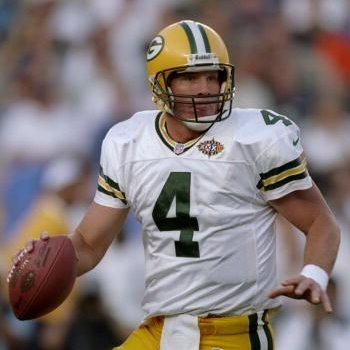
Standing in his way were the Green Bay Packers, the defending Super Bowl champions led by three–time MVP Brett Favre. The oddsmakers made Green Bay an 11–point favorite.

Of course, it wasn't unusual for an AFC team to lose the Super Bowl in those days. The NFC enjoyed a 13–year winning streak in the big game, and, on average, the NFC team outgained the AFC squad 2 to 1 and outscored the AFC team by more than 20 points in those 13 games.

It was a considerable mountain, therefore, that the fates required Elway and the Denver Broncos to climb on that day, and there were many who believed they could not do it.

That in itself was a bit strange because the Broncos had already overcome long odds to get to the Super Bowl in San Diego.

They didn't win their division and had to get into the postseason via the wild–card route. They faced another wild card team, the Jacksonville Jaguars, at home in the first round and won easily, 42–17.

But then they had to travel to Kansas City to face the champions of their division and won, 14–10, on a fourth–quarter touchdown.

And then they had to travel to Pittsburgh to face the Steelers in the AFC championship. The Broncos' late–season loss to the Steelers ultimately was partly responsible for Denver's loss of the division crown, but they turned back the Steelers in the rematch in spite of being shut out in the second half, giving Elway his fourth try at a Super Bowl ring.

What really made this attempt different was the fact that the offense wasn't so heavily focused on Elway and the passing game. Elway was armed with a pretty good running game, too, thanks mostly to halfback Terrell Davis, who ran for more than 1,700 yards.

Davis gave opposing defenses a lot to think about.

Super Bowl XXXII has been mentioned frequently as one of the best Super Bowls ever played. I would have to agree with that — even though I am a Packers fan and Super Bowl XXXII is the only Super Bowl the Packers have lost.

I believed at the time — and I still believe today — that the Packers shouldn't have lost that game.

With the score tied 24–24 late in the game, the Broncos were driving and doing pretty well. A field goal would have been enough to grab the lead, but, with Favre running the Green Bay offense, the Packers could have moved down the field quickly and either tied the game with a field goal of their own or taken the lead with a touchdown.

Elway, no doubt realizing that he might not have another opportunity to win an NFL title, practically willed his team to victory.

And, as Denver faced second and goal at the 1 with 1:47 to play, Green Bay coach Mike Holmgren told his players to allow the Broncos to score, giving the Packers more time for a game–tying drive. They had two timeouts remaining.

So Davis scored for the third time, and the Packers had 1:45 to work with. For awhile, it looked like the strategy might work. The Packers managed to drive to Denver's 31.

But then the drive fizzled out, and Elway had his championship at the age of 37.

As I have written here before, I am a Packers fan. At the time that game's finale was playing out, I didn't know that Holmgren had instructed his players to allow Davis to score. I thought it was a plausible outcome for Denver's drive, given that, all season, Davis had been providing the kind of ground game that Elway had lacked in his three previous trips to the Super Bowl.

And, as I watched the finish of that game, I felt disappointed that the Packers had lost, but I did not feel that the game had been given away. Well, not initially. After I heard about Holmgren's instructions, though, I did.

To be fair, Holmgren claimed that he thought it was first and goal, not second and goal, and, in that context, such a decision would make sense. It would preserve time and timeouts, and it is easy to see how sideline chaos in the final minutes of a Super Bowl could lead to all sorts of mistakes.

Monday, January 31, 2011

Elway's Redemption


Since the Packers are going to play in this weekend's Super Bowl, it seems only fitting to reflect a little on the career of the only quarterback to defeat Green Bay in one — John Elway.

I was never really sure how I felt about Elway the football player, but I know I didn't care much for him as a person through most of his playing career.

In a way, I guess, I felt that he was an elitist, a pretty boy, that he had always had things handed to him — and, when it wasn't handed to him, he pitched a fit until he got his way.

Put it all together, I suppose my conclusion was that he was overrated.

That wasn't fair, but consider my reasoning:
  • He played his college ball for Stanford, one of the most prestigious private research universities in the nation.

  • He was the #1 draft pick in 1983, but he didn't want to play for the team that picked him — the Baltimore Colts — so he was traded to Denver.

    He had lobbied for that trade, and the Colts capitulated.

  • Many players have to toil for years in the NFL before they make it to a Super Bowl. Some never make it at all.

    Others are far more fortunate. They get that far early and often in their careers, and Elway was one of them. He played in three Super Bowls before he was 30.
But he lost all three, and each loss was more spectacular than the one before.

Elway's first Super Bowl was against the New York Giants after he had led the Broncos in "The Drive," an epic 98–yard, game–tying drive in the fourth quarter of the AFC Championship game.

The margin of that Super Bowl was crushing (19 points), but the truth was that, of the two starting quarterbacks who played in that game, Phil Simms of New York was much better than Elway. How could anyone conclude otherwise? Simms completed nearly 90% of his passes.

You could debate which one had the better career — but, on that day, it was no contest.

But that was nothing compared to what awaited Elway and the Broncos the following year.

Denver actually jumped to a 10–0 lead in the first quarter, but the wheels came off in the second quarter as the Washington Redskins scored five unanswered touchdowns and went on to win the game by 32 points.

Once again, it was another quarterback who had the better day by far — Doug Williams of the Redskins.

Denver didn't return to the Super Bowl the next year, but the Broncos were back the year after that. I remember thinking during those playoffs that, if Elway did return to the Super Bowl, it couldn't possibly be any worse for him on that day than it had been against the Giants and the Redskins.

But I was wrong — because waiting for Elway and the Broncos was none other than the juggernaut of the 1980s, the San Francisco 49ers and their all–everything quarterback, Joe Montana.

Montana surgically took apart the Broncos and handed them the worst Super Bowl setback ever.

I remember watching that game and actually admiring Elway's gumption.

Have you ever noticed how some players cease to become factors in the game when something goes wrong? On that day, I saw several Broncos who seemed to check out mentally as the avalanche began.

Many of them had been through those losses to the Giants and Redskins, and they were conditioned for defeat on the big stage. When signs of it seemed to be popping up, they accepted their fate.

That isn't how Elway was wired.

Long after it was clear to just about anyone who had eyes to see that the game was done, he was giving everything he had — as if the Broncos still had a chance to win.

By that time, I had mostly given up on the game and I remember watching the commercials with a lot more interest. An ongoing commercial theme that day centered on a small town in Alaska. The residents of the town, as I recall, had been divided into 49ers supporters and Broncos supporters by McDonald's, which had promised special prices on its hamburgers to the winners.

It was all a gimmick, of course, intended to promote temporary hamburger prices. But there was nothing temporary about the wandering in the wilderness that Elway and the Broncos did for the next eight years.

I am not a Broncos fan, and, I must admit, I seldom gave Elway much thought in those years. But, when I did, I tended to wonder if he would ever return to a Super Bowl.

He came close a few times. But he didn't return until Jan. 25, 1998, when he was 37 years old and everyone watching the game knew he was nearing the end of his career.

Elway had quite a challenge facing him that day — the defending Super Bowl champion Green Bay Packers, who were led by one of the younger breed of quarterbacks in the NFL.

Elway was part of the old guard, and this, many people felt, might be his last chance. He was determined not to waste it, and he showed his desire on a scamper near the end zone late in the game. He didn't score on the play, but he got the first down, and the Broncos went on to score shortly thereafter — and won the game.

(Ain't it funny how things turn out? That wasn't Elway's last Super Bowl after all. But it did turn out to be the last one for that young gunslinger for the Packers, Brett Favre.)

Elway returned to the Super Bowl the following year, leading Denver to another triumph, securing his only Super Bowl MVP Award and capping a memorable career. He retired a few months later, leaving behind a considerable legacy.

In addition to his many single–season and career achievements:
  • He is the only quarterback to start in five Super Bowls.

  • He is one of only two men to score rushing touchdowns in four different Super Bowls.

  • And Elway, who was 38 years old when he played in the 1999 Super Bowl, holds the record for being the oldest quarterback to win one.
I probably wouldn't have said this when he was still playing, but he showed me a lot during his career.

He showed me that he was more than a pretty boy. He was a talented quarterback who wanted to win but didn't always have all the weapons he needed.

I don't think Elway was the greatest quarterback ever to play the game. There are a few others I would pick before I would pick him.

But he deserves to be mentioned in the conversation.