Showing posts with label Packers. Show all posts

Sunday, December 31, 2017

Half a Century Since the Ice Bowl


"I'm going to take a bite of my coffee."

Frank Gifford, CBS color commentator

I have written here before of the legendary Ice Bowl of 1967. I am a lifelong student of history so I often write in my blogs about historic events — but my policy has been not to write about events I have written about before.

As my grandfather would say, I don't like to chew my cabbage twice.

But today is the 50th anniversary of that NFL championship game played between the Dallas Cowboys and the Green Bay Packers at Lambeau Field in Green Bay, Wisc., and on this milestone occasion, it deserves more than a cursory examination.

The game got its moniker from the extreme conditions in which it was played. The game-time temperature was about –15°. Under standards in use at the time, the wind chill was –48°. (National Weather Service standards have since been revised; under those standards, the wind chill would be a comparatively balmy –36°.)

Lambeau Field had a heating system installed beneath the playing surface, which was supposed to keep it in good condition in inclement weather, but the system failed. When the tarp was removed before game time, moisture was left on the field that froze instantly.

That gave rise to the rumor that Green Bay coach Vince Lombardi had manipulated the system in some way so that the brunt of the conditions would be more difficult on the visitors from Texas than the hometown Packers. That rumor was fueled by the perception that Dallas' players were more athletic than the aging Packers.

But it wasn't just the weather that contributed to the game's almost mythical status. In the few short years of the Cowboys' existence, the teams had developed a rivalry that persists to this day, which included a down–to–the–wire battle in Dallas for the NFL championship the year before. That added to the drama going into the game; it was punctuated by a thrilling conclusion.

Once, when I was working on the sports desk of the Denton, Texas newspaper, the sports editor and I had lunch with a friend of his — sportscaster Bill Mercer, a local icon who covered the Ice Bowl for Dallas radio station KLIF. My memory of that lunch conversation is that Mercer was a virtual walking encyclopedia of North Texas sports history. Much of it he had witnessed personally — and much of it focused on the Ice Bowl.

Now retired and living on the East Coast, Mercer reflected on the game for a new documentary about it.

"I can still see that game in my mind," Mercer said. "I'm 91 years old now and it's like it was yesterday. ... I can imagine it's going to go on and on. That game will live forever."

In such brutal weather, many myths gained traction. If they weren't entirely true, they had at least a nugget of truth in them — unlike the allegations about Lombardi.

Most of those allegations were made in jest, though. Even Lombardi's players joked about Vince's influence on the weather and the field conditions.

"I figure Lombardi got on his knees to pray for cold weather," said Green Bay defensive tackle Henry Jordan, "and stayed down too long."

The Packers and Cowboys brought decidedly different histories into the game.

The Packers had been fixtures in the National Football League for nearly half a century. They were two–time defending NFL champions and winners of more NFL championships than any other franchise.

The Cowboys began as an expansion team in 1960, but Dallas coach Tom Landry built them into Super Bowl contenders in less than a decade.

And they had plenty of motivation to win this time. They lost the NFL championship game the previous year in Dallas to those same Packers.

Adding to the intrigue was the fact that Lombardi and Landry had served together on Jim Lee Howell's New York Giants coaching staff in the 1950s.

Dallas had not played in Green Bay since its first year of existence. When the Cowboys arrived in Green Bay a couple of days before the game, the temperature was in the 50s, and quarterback Don Meredith mugged for the cameras, cupping his hands and saying the championship game was going to be "easy money."

The Cowboys knew a cold front was coming, but it was not expected until after the game was over.

It wasn't the first time meteorologists got it wrong.

The Packers scored first, capping a nine–minute drive with an eight–yard touchdown pass from Bart Starr to Boyd Dowler in the first quarter.

The conditions seemed to have put the Dallas offense in the deep freeze as it continued sputtering, but the Packers kept rolling.

In the second quarter, Green Bay took a 14–0 lead when Starr hit Dowler for another touchdown, this time from 46 yards.

It looked like the Cowboys were in trouble. In fact, it looked like the Cowboys would rather be anywhere else than Green Bay. As cold as it was, who could blame them?

And, indeed, the offense continued to struggle against the Packers' defense.

But now the Packers' offense began to struggle, too.

Later in the second quarter, as Starr went back to pass, the Cowboys' pass rush trapped him behind the line and stripped him of the ball. George Andrie picked it up and ran seven yards for a touchdown, cutting the deficit in half with about four minutes remaining before intermission.

After recovering a fumbled punt on Green Bay's end of the field with less than two minutes to play, the Cowboys added a field goal.

In keeping with the freakish nature of the game, Dallas did not get a single first down in the second quarter yet scored 10 points and trailed by only four at halftime.

The Cowboys' offense performed much better in the third quarter but still failed to generate a touchdown. The Packers were the ones who were sputtering, and the third period was scoreless. Going into the final quarter, Green Bay still led 14–10.

That would soon change.

On a halfback option, Dan Reeves hit Lance Rentzel for a 50–yard touchdown strike, and Dallas had its first lead of the game 17–14 with only eight seconds gone from the final period.

Finally staked to a lead, the Dallas defense appeared to have new life while the Green Bay offense seemed to have none.

The score remained 17–14 until the game was nearly over.

With just under five minutes to go, the Packers fielded a punt and started their final offensive possession of the game at their own 32. Field conditions were deteriorating by the minute.

All things considered, the Packers' effort in that final drive may never be matched in terms of execution or heroism.

The drive seemed to stall in the final minute with the Packers in the shadow of the Cowboys' goal post. Green Bay called its last timeout with 16 seconds remaining and the Packers a yard away from the end zone on fourth down.

Green Bay could have kicked a field goal and hoped to win the game in overtime. That would have been in character for Lombardi, who was not known as a gambler — in fact, he was noted for saying that "everybody loves a gambler until he loses" — and the field goal certainly would have been the conservative option. But apparently, it was never seriously considered.

"I didn't figure all those people up there in the stands could take the cold for an overtime game," Lombardi said. There was probably more to it than that, but he told Starr to take it in for the touchdown. And he did.

Fullback Chuck Mercein, a late–season acquisition for the Packers, played a key role in the winning drive — and is the person you can see with his hands raised in the photos of Starr after he scored the winning touchdown (he is number 30 in the photo at the top of this post).

Many people assume Mercein was signaling that Starr had scored, but he said he was trying to show the referees that he hadn't pushed Starr into the end zone. That would have resulted in a penalty, and the Packers almost surely would have had to settle for a field goal.

"I realized that was a singular moment in my career," Mercein, who made some important gains to set up Starr's game–winning play, said. "It means more to me because I was able to pay it forward, the faith that Vince Lombardi had in me. There were plenty of other backs he could have picked up. Seldom does it happen where you can repay someone for their faith in you."

For half a century the Ice Bowl has remained vivid in memories and no doubt would continue to do so with little help, but Meredith's son Michael, who was only a few months old when his father played in the game, has made a film about it that premiered recently on the NFL Network.

Sadly there is no known complete copy of the Ice Bowl telecast in existence. Radio broadcasts do still exist, including the one of Mercer calling the game for KLIF. Meredith used video clips that do exist and interviews with participants to tell the story.

That should heat up those memories of an already memorable day.

Thursday, November 26, 2015

A Thanksgiving Thrill


I've been a Green Bay Packer fan just about all my life, ever since I started collecting football cards in first grade.

I was born on Thanksgiving so every once in awhile, my birthday falls on Thanksgiving, as it did this year. But the Packers don't always play on Thanksgiving — nor, for that matter, do they always play on my birthday when it falls on a Sunday.

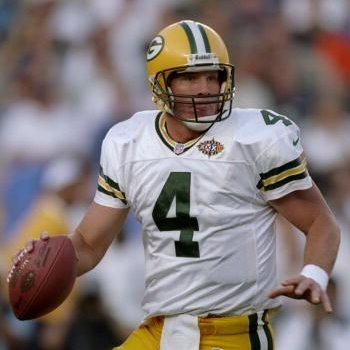
This year, however, they played the Chicago Bears tonight, which is both Thanksgiving and my birthday, in order to honor Brett Favre by inducting him into the Packers' Ring of Honor. (Actually, the game is still in progress as I write this so referring to it in the past tense really isn't appropriate, is it?).

And one of the highlights for me — probably the greatest highlight for me — was to see Bart Starr and Brett Favre embrace each other on the turf of Lambeau Field. My two favorite quarterbacks of all time.

I have known for a long time what a struggle it was for Starr to be able to be in Green Bay. He's been battling the effects of some pretty severe strokes, but he looked pretty good tonight.

The two quarterbacks could hardly be more different, I suppose.

I have always admired Bart Starr, going back to when I was a kid. He was the kind of guy who is worthy of admiration. He didn't seek the spotlight the way so many players do today. He didn't put up gaudy numbers — except on the scoreboard, where he was the perfect captain for Vince Lombardi's offense. Lombardi devised the game plan, and Starr carried it out. All he did was win.

Favre was a free spirit, a winner who made the people around him winners by sheer force of will. Favre was a force of nature, refusing to be benched during his phenomenal consecutive games played streak even if you thought there was no way he could be playing.

I suppose my ideal quarterback would be a combination of Bart Starr and Brett Favre.

But since that will never happen, I'll settle for the next best thing. That was what I got tonight.

For this I am truly thankful.

Tuesday, February 3, 2015

That Was a Boneheaded Call


Sunday's Super Bowl had no real attraction for me — which is ironic, I suppose, since the overnight numbers indicate that it was the highest–rated Super Bowl ever. Obviously, it had an attraction for some people.

But I was a disinterested observer, watching only because there really was nothing else to watch. That is one of the things I remember from my days on the sports copy desk. Super Bowl Sunday was all about the Super Bowl. There might be a few basketball games earlier in the day, but they were just to fill the time. Once the Super Bowl began, nothing else was happening.

I also discovered that nothing competes with the Super Bowl on TV, either. Maybe there was a time in the last 50 years when the networks tried to compete with whichever one had the broadcast rights, but they must have learned quickly that was pointless. People throw parties on Super Bowl Sunday. You can't compete with that.

Once video recorders became a part of American households, it was possible to have quality options. Before that, though, it was the Super Bowl or nothing. On the sports desk, ever mindful of our deadlines, we kept one eye on the game and the other eye on the clock.

I stopped working on sports desks several years ago, and Super Bowl Sunday means something entirely different to me now. Sometimes the Super Bowl has had great meaning for me — like when the Green Bay Packers are playing in it. Most of the time, though, to borrow an expression I heard often when I was growing up, I haven't had a dog in that hunt.

That was the situation in which I found myself Sunday. I didn't really care for either team so I was able to watch with a complete sense of detachment. Being a Packer fan, my attitude would have been entirely different if the Packers had beaten the Seahawks in the NFC championship game. But they didn't so I was free to be just a football fan. That was kind of nice. It meant I could second–guess strategy — which I guess I can do anyway, but it is different when the Packers are playing. I always feel like I am being disloyal if I second–guess the coach's strategy. After all, he works with the players every day. He knows their strengths and weaknesses better than I do — even though I like to tell myself that I know those things, too.

When I have no emotional stake in the outcome, it is easier in some ways to watch the game and more difficult in others.

But I don't have a problem with calling 'em the way I see 'em — and that was a boneheaded call by Seattle's Pete Carroll.

One yard from the end zone. Seattle needed a touchdown to win the game. Carroll has, perhaps, the most punishing running back in the NFL today on his roster, a man who is certainly capable of picking up a single yard. And if he doesn't get it, you've still got time and a timeout to use. You can try again.

Sure, it's playing the odds. Sure, it's predictable. It's even boring — except that it probably would have worked. The Seahawks had the top–rated rushing game in the NFL this season. New England had the ninth–best run defense in the entire NFL — good but not great. How can it be great when the New York Jets were rated ahead of the Patriots in run defense?

Fact is, the Patriots were worse against the pass than they were against the run. They ranked 17th in the NFL. But when you're talking about the passing game, New England's pass defense has the edge against Seattle's pass offense, which ranked 27th in the entire NFL.

"You dance with who brung you," Darrell Royal used to say. The Seahawks relinquished their NFL title because they forgot to dance with who brung 'em.

Tuesday, June 11, 2013

Lombardi's Centennial


Today is a special day for Green Bay Packers fans like myself.

It would have been the 100th birthday of Vince Lombardi.

I barely remember watching Lombardi coach the Packers to victory in Super Bowl II. My family had just gotten its first TV set a few months earlier — black and white (color TV was way out of my parents' budget in those days) — and my mind still houses memories of seeing the Packers play on TV in those days.

Granted, those memories are kind of like those scratchy black–and–white newsreels that you see from time to time on documentaries, but that's where my lifelong support for the Packers was born.

My father was a college professor when I was growing up, and sometimes he spent the summers taking advanced education courses at other schools. One year — probably a year or two after Lombardi left the Packers' sideline — Dad spent about six weeks in Wisconsin. When he came home, he brought back a copy of the Packers' yearbook for that season for me. It was my most cherished possession for the next couple of years — until it literally fell apart.

Lombardi is an iconic figure for lots of people. In Green Bay, they call him St. Vince, the only Packer coach (so far) to win back–to–back Super Bowls. One other coach did take the Packers to consecutive Super Bowls, but he didn't win both.

I suppose when (if) another coach duplicates Lombardi's achievement, he will be elevated to sainthood in Green Bay. Until that happens, though, Lombardi stands alone.

I have vague memories of watching Lombardi in his one and only season of coaching the Washington Redskins in 1969, but the Redskins hadn't been good for a long time, and they didn't get too much TV coverage in those days (as I recall). Lombardi's presence raised the interest level, though, and he did wind up coaching the Redskins to a winning season.

He probably would have accomplished even greater things in the years ahead, but he was diagnosed with cancer in the summer of 1970 and died before the next season began.

I remember when he died in September 1970. The memory is linked to a childhood memory.

My father had been away at another advanced education course (at Northwestern, as I recall), and he was due to return by air on a Wednesday so Mom, my brother, some friends of the family and I piled into the family car and drove to Little Rock to pick him up.

As we drove to the airport, we had the car radio on. On the newscast, I heard reports that Lombardi was near death.

When we arrived at the airport, we were told that Dad had been delayed several hours. I don't remember why. Perhaps there were problems with the plane. Maybe he missed his flight and had to take a later one.

Whatever the reason was, my mother consulted with the family friends and decided to go home, have dinner and drive back to the airport when Dad's flight was due to arrive. That's what we did.

As we drove back to the airport that night, I remember staring out the windows of the car at a relatively starry sky and hearing another radio report that said Lombardi was likely to die within hours.

We greeted Dad's plane and drove home. I don't remember hearing the radio on the return trip. The adults were too busy talking, and the radio would have interfered.

But the next morning, when I got up, I remember going into the living room where my father was having his breakfast in front of the TV, which was reporting that Lombardi had died a few minutes earlier. I felt a depth of loss that I have rarely felt in my life. He was 57 years old.

And today he would have been 100. Most people don't live to 100; even fewer of Lombardi's generation have done so, and I sincerely doubt that, had cancer not ended his life, he would still be alive today.

But the 100th anniversary of his birth is a good occasion for reflecting on his life and times.

Friday, January 25, 2013

Elway's First Championship


On this day 15 years ago, John Elway finally stood at the peak of his profession in the twilight of his career.

Elway had been in the NFL for 15 years. He had played in three Super Bowls — and lost them all. It was widely believed that Super Bowl XXXII would be his last opportunity to win one.

Standing in his way were the Green Bay Packers, the defending Super Bowl champions led by three–time MVP Brett Favre. The oddsmakers made Green Bay an 11–point favorite.

Of course, it wasn't unusual for an AFC team to lose the Super Bowl in those days. The NFC enjoyed a 13–year winning streak in the big game, and, on average, the NFC team outgained the AFC squad 2 to 1 and outscored the AFC team by more than 20 points in those 13 games.

It was a considerable mountain, therefore, that the fates required Elway and the Denver Broncos to climb on that day, and there were many who believed they could not do it.

That in itself was a bit strange because the Broncos had already overcome long odds to get to the Super Bowl in San Diego.

They didn't win their division and had to get into the postseason via the wild–card route. They faced another wild card team, the Jacksonville Jaguars, at home in the first round and won easily, 42–17.

But then they had to travel to Kansas City to face the champions of their division and won, 14–10, on a fourth–quarter touchdown.

And then they had to travel to Pittsburgh to face the Steelers in the AFC championship. The Broncos' late–season loss to the Steelers ultimately was partly responsible for Denver's loss of the division crown, but they turned back the Steelers in the rematch in spite of being shut out in the second half, giving Elway his fourth try at a Super Bowl ring.

What really made this attempt different was the fact that the offense wasn't so heavily focused on Elway and the passing game. Elway was armed with a pretty good running game, too, thanks mostly to halfback Terrell Davis, who ran for more than 1,700 yards.

Davis gave opposing defenses a lot to think about.

Super Bowl XXXII has been mentioned frequently as one of the best Super Bowls ever played. I would have to agree with that — even though I am a Packers fan and Super Bowl XXXII is the only Super Bowl the Packers have lost.

I believed at the time — and I still believe today — that the Packers shouldn't have lost that game.

With the score tied 24–24 late in the game, the Broncos were driving and doing pretty well. A field goal would have been enough to grab the lead, but, with Favre running the Green Bay offense, the Packers could have moved down the field quickly and either tied the game with a field goal of their own or taken the lead with a touchdown.

Elway, no doubt realizing that he might not have another opportunity to win an NFL title, practically willed his team to victory.

And, as Denver faced second and goal at the 1 with 1:47 to play, Green Bay coach Mike Holmgren told his players to allow the Broncos to score, giving the Packers more time for a game–tying drive. They had two timeouts remaining.

So Davis scored for the third time, and the Packers had 1:45 to work with. For awhile, it looked like the strategy might work. The Packers managed to drive to Denver's 31.

But then the drive fizzled out, and Elway had his championship at the age of 37.

As I have written here before, I am a Packers fan. At the time that game's finale was playing out, I didn't know that Holmgren had instructed his players to allow Davis to score. I thought it was a plausible outcome for Denver's drive, given that, all season, Davis had been providing the kind of ground game that Elway had lacked in his three previous trips to the Super Bowl.

And, as I watched the finish of that game, I felt disappointed that the Packers had lost, but I did not feel that the game had been given away. Well, not initially. After I heard about Holmgren's instructions, though, I did.

To be fair, Holmgren claimed that he thought it was first and goal, not second and goal, and, in that context, such a decision would make sense. It would preserve time and timeouts, and it is easy to see how sideline chaos in the final minutes of a Super Bowl could lead to all sorts of mistakes.

Monday, January 14, 2013

Lombardi's Super Swan Song


The second–ever Super Bowl, which was played 45 years ago on this day, was an emotional game for the eventual winners, the Green Bay Packers.

Their coach, Vince Lombardi, hadn't officially announced his retirement yet, but there were suspicions — on the street and in the Packers' locker room — that the game against the Oakland Raiders would be his last.

In his book about the 1967 NFL season, "Instant Replay," guard Jerry Kramer wrote about the days leading up to the Super Bowl and his thoughts and observations — and growing suspicions that Lombardi would be leaving.

At the team's afternoon meeting a couple of days before the game, Kramer wrote that Lombardi became unaccountably emotional as the team broke into smaller groups. Afterward, a teammate asked him what he thought it meant.

"Looked like there's no question about his retirement," Kramer replied.

Two days later, after the Packers beat the Raiders, 33–14, Kramer was one of the players who helped carry Lombardi off the field.

Earlier, Kramer had recorded Lombardi's pregame speech — his last, or so everyone thought at the time. Lombardi would return to the sideline a couple of years later to coach the Washington Redskins, and he gave pregame speeches to motivate the 'Skins in the 1969 season, but he would never again deliver another speech before a Super Bowl.

It may have been on this day in 1968 that I began my lifelong attachment to the Packers. I grew up in the South — never, to my knowledge, ever got close to Green Bay, Wisconsin — but I've been a Packer fan as long as I can remember.

I think my family may have had a TV set on this day 45 years ago, but I'm not really sure about that. I remember that we did have a TV the following month because that was the month that Peggy Fleming won Olympic gold in figure skating, and my mother insisted that we eat our dinner in front of our TV set when figure skating was on.

But that's another story to be told at another time.

I kind of think I may have watched this game at my friend Larry's house. His family had a color TV, and not too many people had those in 1968. My family sure didn't. We had one of those old black–and–white portables (with a screen that was probably 13 or 15 inches) with the rabbit ears, and that was our family television.

My family lived in the country, and Larry's house was about a mile or so from ours so, if the weather was nice that day, I probably rode my bike to Larry's house, and if the weather wasn't so nice — if there was ice or snow on the ground (and there probably wasn't because we hardly ever had ice or snow in central Arkansas) — I probably walked all the way.

I have spotty memories of seeing Lombardi and the Packers on TV when I was small so I can't be sure I watched the game at Larry's. I only suspect that I did. Larry was probably my best friend in those days, and he was a Packer fan, too. If we watched the game together, I'm sure we were whooping and hollering all afternoon.

For the second straight year, Green Bay quarterback Bart Starr was named the game's most valuable player — even though his numbers would pale next to the numbers that subsequent players piled up. He completed one pass for a touchdown and racked up a little more than 200 yards through the air.

That woulddn't have bothered me, though. Starr was my favorite player.

It's really a shame I don't have more of a memory of that afternoon because I had to wait 30 years to see the Packers play in another Super Bowl. The memory of the game that was played 45 years ago would have had to sustain me for three decades.

As it was, I spent most of that time not entirely sure that I saw the Packers play in that first or second Super Bowl — and wondering if I ever would see them play in one again.

Monday, December 24, 2012

Christmas Eve


When I was a child, there was a certain sameness to every Christmas and every Christmas Eve.

We lived about 330 miles from Dallas, where my parents grew up and where my grandparents lived until they died. My father was a college professor so, as soon as his school dismissed for the holidays and my brother and I were dismissed from our schools for the holidays, the family would pack up the car and hit the road for Dallas.

Both of my grandfathers died before I reached the age of 10, but we always stayed with my mother's mother when we were in town and we always visited my father's mother.

In addition to the family obligations, Christmas in Dallas always involved visiting all my parents' friends who were still in the area — and there were quite a few. Sometimes we planned group outings; if a good movie was showing, we might assemble for lunch and a matinee. If a Pink Panther movie was showing, seeing it was a sure thing.

The friends frequently gathered on Christmas Eve to drink wine and nibble on snacks. When I got a little older, I was allowed to join the festivity. I wasn't allowed to drink the wine until I was old enough to do so legally, but I drank soft drinks and enjoyed the snacks.

Well, that was how the holidays typically played out when I was growing up.

But I remember one special Christmas Eve — 40 years ago today — that I spent watching football with my father's mother.

Since I was a child, I have been a Green Bay Packers fan, and I guess I became a fan of the Packers in much the same way that most others do. They were the top team when I was little and I saw football on TV for the first time.

My family didn't have a TV until after the Vince Lombardi era, but our neighbors did, and that was where I saw football for the first time and became a Packers fan.

The Packers were terrible when I began following them and calling them my favorite team, but things changed — or seemed to — 40 years ago when Green Bay took the NFC Central crown from the Minnesota Vikings, who usually won that division in those years.

And on this day 40 years ago, the Packers played the Washington Redskins in the playoffs.

I remember little about that day except that I was excited about the Packers being in the playoffs. My mother and father and brother wanted to do some last–minute Christmas shopping, but I wanted to watch the football game. So my grandmother offered to stay with me that afternoon and watch the game while the rest of the family went shopping.

The Packers were never really in that game — the Redskins went on to lose to the undefeated Miami Dolphins in the Super Bowl — but I remember sharing the experience of watching that game with my grandmother.

There weren't many times in my life when I got to share something with her like that, and she died less than four years later. It is a cherished memory for me now — even though I can't remember anything we said that afternoon. I just remember that she cheered when something good happened for the Packers, even though not much did.

Grandmother was a Cowboys fan — and her Cowboys went on to lose to the Redskins the next week — but she cheered for the Packers that day just because they were my favorite team.

Wednesday, September 26, 2012

The Blown Call

This image, from Monday night's Hail Mary completion, with
one official signaling a score and the other a turnover, is
being seen as symbolic of the replacement referees' performance.


It's never been my style to criticize the officials at sporting events, even when they made questionable calls that went against my team.

Bad calls come with the territory — and when all is said and done, it tends to come out equal. Most of us have as many dubious calls that favor us as ones that go against us.

I have watched the replacement referees trying to do a tough job under trying circumstances, and I have sympathized with teams that were hurt by clearly blown calls.

But I have remained silent — partly because I know that things usually balance out in the end but mostly because my father told me when I was young that a single play or call seldom decides the outcome of a game. I believed it.

I guess I still believe that — even though a blown call at the end of the Monday Night Football game obviously did decide the outcome of that game, and it is the clearest evidence yet that the NFL and the officials need to settle their labor dispute and get the experienced referees back on the field.

This is similar to the weeks a quarter of a century ago when the NFL's players were on strike, and team owners chose to field replacement teams manned by all sorts of frustrated athletes who had been forced to do something else for a living rather than cancel games.

To be sure, a handful of those guys exceeded expectations and went on to play in the real NFL for awhile after the strike ended, but most of them went back to whatever they had been doing before — selling lawn furniture or insurance or whatever.

And the same fate may await the replacement refs today. Some of them have performed well and would deserve a chance to prove they belong out there, but the vast majority have not. Monday night's game was simply the most blatant example.

Sportswriter Joe Posnanski says it was "a farce."

In The Sporting News, David Steele argues that the case against NFL Commissioner Roger Goodell has been building for months. Steele thinks Goodell should step down if he can't (or won't) satisfactorily resolve the situation.

Even the candidates for president are weighing in.

And normally mild–mannered Green Bay quarterback Aaron Rodgers apologized to fans for the poor performance of the replacement refs.

"Some stuff just needs to be said," Rodgers said, observing that the NFL won't. "The games are getting out of control."

Only one thing will bring the games back under control — a resolution of the labor dispute.

Friday, January 27, 2012

Return to Titletown


I remember, as a child, watching the Green Bay Packers play on TV.

Vince Lombardi was their coach, and I was becoming interested in football cards. My cards of Bart Starr, Ray Nitschke, Willie Wood, Donny Anderson and all the others were my prized possessions.

I believed the Packers were the best in football — and they were. But I believed it would always be that way — and it wasn't.

Frankly, it seemed like kind of a dirty trick to me, hooking me as a Packers fan at an early age and then reducing the Packers to NFL bottom feeders for many years.

I can't tell you how often I longed on Super Sunday — as I watched the Dolphins or Steelers or Cowboys or 49ers win it all time after time — for the Packers to just get to a Super Bowl.

I always told myself I wouldn't mind if they lost the game. I just wanted them to play in the Super Bowl, the game everyone watched.

Of course, that wasn't true. The longer I waited, the more I wanted to see the Packers win. Just getting there wouldn't be enough. Eventually, I had to acknowledge that.

But, for a long time, the possibility of the Packers being in the Super Bowl was extremely remote. The Packers usually failed even to make the playoffs. In fact, they typically did so spectacularly. They were frequently among the first to be mathematically eliminated from the playoff discussion.

A Packers Super Bowl appearance was strictly hypothetical for Green Bay fans.

That changed 20 years ago. With a few exceptions, the Packers have become fixtures in the NFL playoffs, and they have actually been to three Super Bowls in those two decades, winning two and losing the NFC Championship game on two other occasions.

It changed when Brett Favre took over as the Packers' quarterback. Not right away. Favre led Green Bay to the playoffs almost from the start, but the Packers in those days reminded me of the Tin Woodman in "The Wizard of Oz" — a little creaky at first but gradually picking up speed as the oil spread to its extremities.

The Packers of the early '90s returned to the playoffs as a wild–card team in 1993 and 1994, then won their division in 1995 and made it to the NFC title game, where they lost to Dallas.

It was 15 years ago that the Packers finally returned to the Super Bowl for the first time since Lombardi's day. Their opponent in the New Orleans Superdome was the New England Patriots.

That might seem rather unremarkable to modern football fans, who have seen both teams in multiple Super Bowls in recent years, but it certainly made Super Bowl XXXI intriguing. At the time, the Patriots had only been to one other Super Bowl more than a decade earlier and had lost in rather spectacular fashion to the Chicago Bears. And the Packers, of course, hadn't been to the Super Bowl in three decades. On the basis of that, I wasn't sure that either team had an advantage.

The Packers, however, had made an impression on the guys who determine the point spreads in athletic contests, presumably based on Green Bay's recent upward trajectory in the playoffs. New England, on the other hand, was considered something of a flash in the pan, having rarely been seen in the postseason since losing the Super Bowl to Chicago.

Anyway, the Packers went into the game favored by 14 points. As a lifelong Packers fan, I felt a certain amount of gratification, naturally, but I also felt a bit anxious as Super Sunday approached. Everyone was treating the outcome as a foregone conclusion, and the last thing I wanted the Packers to do was to treat the game as if victory was assured.

Initially, it seemed my fears were justified. At the end of the first quarter, New England led, 14–10, but the Packers scored 17 unanswered points in the second quarter and went to the locker room with a 27–14 halftime lead.

In hindsight, I needn't have worried. As it turned out, the Packers won by precisely 14 points, thanks to a jaw–dropping 99–yard third–quarter kickoff return for a touchdown by Desmond Howard, who became the first special teams player to win the Super Bowl MVP.

Howard's return certainly deserved recognition, but I always felt that Green Bay's victory on that day was more of a team effort, with many people making significant contributions.

Howard's return did, in fact, stop New England's momentum dead in its tracks. The Patriots had just scored a touchdown that brought them within six points of the Packers, and Howard's return took all the wind from their sails.

But defensive lineman Reggie White did his part as well, setting a Super Bowl record for sacks. I can vividly remember seeing White pick up Patriot offensive linemen and toss them aside as if they were rag dolls.

And Favre, who is considered by nearly everyone to be a lock for the Hall of Fame, threw for two touchdowns and ran for another. He was the first Super Bowl–winning quarterback to account for three touchdowns or more and not be named MVP.

That didn't seem to bother Favre at the time. "We etched our place in history today," he said after the game, putting the team's accomplishment over everything else.

Favre, like most observers, probably figured he would have other opportunities to be named the Super Bowl's MVP. But he didn't.

He did play in another Super Bowl — the following year — and lost it. Only once has the Super Bowl MVP come from the losing team — and it wasn't Favre.

When Favre is inducted into the Hall of Fame, there will be many achievements to be listed beneath his name — but Super Bowl MVP will not be among them. And, in some ways, that seems unfair. All the other Green Bay quarterbacks who took the Packers to the Super Bowl were named Super Bowl MVP — including Aaron Rodgers, Favre's successor.

But Favre has a special distinction that may not always get the attention it deserves. He revived a proud but moribund franchise — as did Bart Starr in the 1960s — and is responsible for the virtually dynastic status the Packers enjoy today.

It sure is a different world from the one in which I grew up.

Sunday, January 15, 2012

The First Super Bowl


Super Bowl Sunday is firmly established as perhaps the biggest social event of any year.

It's so well established, in fact, that it is almost certainly difficult for most people to imagine a time when there was no Super Bowl. But there was.

The first Super Bowl was played 45 years ago today. It wasn't called the Super Bowl at the time. It was generally known as the AFL–NFL World Championship Game; some media reports called it the Supergame. Later on, Kansas City Chiefs owner Lamar Hunt came up with the name it is known by today — Super Bowl.

But that's another story.

What it was, actually, was the Establishment vs. the Upstarts. The Establishment was the NFL, appropriately represented by the Green Bay Packers — who, incidentally, will be hosting the New York Giants in the playoffs later today. The Upstarts, the AFL teams, had only existed for a few years, but, like a presidential challenger who is given an opportunity to stand on a level playing field as the president's equal in a debate, they were eager to make the most of it.

Unfortunately for the AFL's representatives, the Chiefs, things never really went their way. That didn't surprise most people. The Packers came into the game as 14–point favorites and exceeded expectations with a 25–point margin of victory.

I guess it goes without saying that a lot of things have changed in 45 years. That's probably a classic understatement applicable to any time, any year in recorded history, and it's certainly true of the Super Bowl.

The game that was played 45 years ago today really bore little resemblance to the spectacle that the Super Bowl has become. The difference in the name is probably the least of the changes.

In fact, if a football fan could be magically transported back to January 1967, that fan would be in for quite a case of culture shock.

Oh, to be sure, it would look like the same game in many ways — same field dimensions, same rules (mostly), same uniforms (although their designs as well as their construction certainly have changed).

The first thing a modern fan probably would notice would be an absence of hype surrounding that first Super Bowl. It was really more of a curiosity. I mean, everyone just knew that the NFL's team would beat the AFL's team. The superiority of the NFL was obvious. Nearly all of the best college football players went on to play for NFL teams.

At that time, I think the only truly high–profile college player who had signed with an AFL team was Joe Namath — and Namath did go on to win an early Super Bowl, legitimizing the league in the eyes of many. But that was still in the future on this day in 1967.

Super Bowl I was unique in other ways.
  • It is the only Super Bowl to be broadcast on two TV networks, NBC and CBS. NBC had the rights to AFL games; CBS had the rights to NFL games.

    Subsequent Super Bowl broadcast rights have been granted to only one network each year, although the network has varied depending upon the arrangement. Forty–five years ago, it was decided that the best solution was to permit both networks to carry the game.

  • Very little video footage from that first Super Bowl survives to this day, even though two networks carried it.

    There was a broadcasting procedure at the time called wiping, in which videotape of a previous program was taped over. Usually — but not always — this was done with tapes of programs that weren't expected to have much value in the future.

    It is, perhaps, indicative of just how low expectations for the game were that both networks chose to recycle their videotapes instead of preserving them.

  • Considering how difficult it is to acquire tickets to a Super Bowl today, it certainly would surprise some modern fans to know that the very first Super Bowl was not a sellout.

    It was still possible on game day to walk up to the Los Angeles Coliseum, where the game was played, and pay $12 for admission to the game. Those were the days, huh?

Friday, January 13, 2012

Confessions of a Packer Fan


I try not to mention it too often on this blog, but I am a Green Bay Packers fan.

I have been a Cheesehead since I was a child — when I lived in central Arkansas, the only TV my family had was a rather small black–and–white number that my grandparents gave us and a guy named Lombardi was on the Green Bay sideline.

Through most of my life, a statement like "I am a Green Bay Packers fan" was kind of like one of those confessions people make at 12–step meetings. But not really. I mean, such meetings usually are about some kind of addiction over which a person is powerless, like an addiction to alcohol or tobacco. Other times, they are about an addiction to some other kind of destructive behavior, like kleptomania.

In the early years of my life, being a Packer fan was rarely about gratification — although I guess a case could be made for the cumulative destructive impact on one's psyche and self–esteem from all those losing seasons.

("My name is David, and I'm a Packerholic ...")

For awhile, I wore it as a badge of honor. When I was about 12 or 13, I had a Packers jacket — designed like those letterman jackets that jocks have been wearing since the dawn of time — that I wore almost defiantly everywhere I went.

It was a small club. I had a few friends who liked the Packers, too, and most of my friends wore similar NFL jackets, but the logos on their jackets were for the winners. I tended to see most of my peers as either fair–weather fans who followed whichever team was winning (they were the ones who liked Don Shula's Dolphins or Chuck Noll's Steelers) or were susceptible to regional influences (mostly Cowboys fans).

I considered myself special because my allegiance was not based on either factor.

Green Bay must be several hundred miles from my hometown, and the Packers rarely had winning seasons when I was growing up. It's hard to make a convincing case that someone jumped on a team's bandwagon when the team in question routinely loses at least two–thirds of its games — unless the fan is a glutton for punishment, which I am not.

(At least, I don't think I am.)

But, as I got older, I started to think that being a Packer fan was something shameful so I stopped sharing it with new acquaintances, and I became selective about the old friends with whom I would discuss it. In that sense, perhaps I was sort of like an alcoholic, indulging in my addiction within a select circle of friends — or (shudder!) when I was by myself.

Most of the time, it was easier just to not say anything when I was with a group of Cowboys fans or fans of the latest powerhouse.

Drinking alone would have been far more satisfying than sitting through the Packers' often lopsided losses. Fortunately, I guess, I rarely saw a Packers game on TV in those days. They weren't winning so there was little interest in them outside their home region.

Occasionally, I might get to see them on a Sunday (if they were playing someone in my region, like the Cowboys or the Chiefs or the Cardinals when they were still in St. Louis) or in a Monday night game. But, most of the time, I was spared the pain of watching them being subjected to a severe beating — which, inevitably, they were.

In spite of it all, I remained loyal to the Packers — through all those 2–, 3– and 4–win seasons. I assured myself that things would turn around eventually. I just didn't know if I would live to see it.

But I did.

I guess all those losing seasons really conditioned me because, even after the Packers turned things around, I still kept expecting them to revert to their old ways. In my formative years — after Lombardi left Green Bay — success was fleeting. Winning seasons didn't come in bunches.

I must admit, I was often envious of the people I knew whose favorite teams were always in the playoffs. For me, if my favorite team was in the playoffs, that alone was cause for celebration. Who knew when it might happen again?

Because of that mindset, it's kind of like an out–of–body experience — or maybe an alternate reality experience — to read Richard Rothschild's suggestion in Sports Illustrated that today's Packers might be better than Lombardi's teams of the 1960s.

Well, actually, Rothschild didn't suggest it — members of the 1961 team that won the first of five NFL championships in seven years suggested it — but Rothschild made a good statistical case supporting it.

God help me, I think I'm starting to believe it.

In my experience, things started to turn around in the 1990s, when Brett Favre came to Green Bay and started leading the Packers to the playoffs on a regular basis. Before he left Green Bay, Favre set all kinds of records and took the Packers to two consecutive Super Bowls, matching Bart Starr's achievement in my childhood, but he couldn't win both.

But even with all his success, even with three consecutive MVPs in the 1990s, Favre didn't take the Packers to the dizzying heights that were reached in the 1960s. Starr is still the only quarterback to lead the Packers to two straight Super Bowl victories.

But Aaron Rodgers, Favre's successor, has the opportunity to match Starr in that category if he wins this year's Super Bowl, and the Packers appear to be talented enough to turn this decade into a repeat of the decade of Starr and Lombardi.

But who should be standing in their way this weekend but the New York Giants ... the very team that came to Lambeau Field four years ago and beat Favre in his final game in a Packer uniform, the NFC Championship game that most observers thought would propel him to his third Super Bowl.

That would have been a first for a Packer signal caller. Instead, it was the end of an era, and I am sure I wasn't the only Packer fan who worried that the team might slip back into mediocrity.

The Packers did slump to that all–too–familiar sub–.500 territory in Rodgers' first season as Green Bay's starting quarterback, but he had them back in the playoffs the next year. And he won the Super Bowl the year after that.

The NFC Championship is not on the line this weekend. It won't be the first time these teams have played each other since that game in January 2008. They've met twice, both times in Green Bay, and the Packers have won both.

But those were regular–season games. There's an appealing symmetry to the idea that Rodgers — who launched a 19–game winning streak with a lopsided victory over the Giants in December 2010 — can avenge that playoff loss Sunday.

Wanna talk symmetry? The Giants were the first team the Packers of the 1960s beat in an NFL championship game back in December 1961. On Sunday afternoon, they will be back at Lambeau Field.

In spite of myself, I'm starting to think pro football history might be about to repeat itself.

Monday, October 10, 2011

A Memorable Start


I grew up in the South — in the heart of what was Dallas Cowboys territory when I was young — but, as long as I can remember, I've been a fan of the Green Bay Packers.

My memory of watching football games on TV doesn't go back before I was in elementary school because we didn't get our first TV until I was in first grade. But I remember watching football games with my father on Sunday afternoons (there were no Sunday or Monday night games in those days — except on rare, special occasions), and I got to see Vince Lombardi in his last years as the Packers' coach — even if it was on our rather small black–and–white set.

(I've seen color footage of Lombardi, and it never looks quite right to me. Images of Lombardi only look right in black and white!)

Since that moment when I first saw the Packers play, I have been a Packers fan. You can believe me when I tell you there have been many painful seasons for Packer fans since Lombardi's day.

Modern fans probably look at today's Packers and see an organization that has been largely successful for the last 20 years. The Packers, after all, have been to three Super Bowls in the last two decades and won two of them, and they've come close on other occasions. They've only missed the playoffs a handful of times.

But that isn't the whole story, at least not for those of us who have been following the Packers longer than that. After Lombardi led the Packers to victory in those first two Super Bowls, the Packers went to the playoffs — wait for it — twice in 25 years.

Talk about a long dry spell.

The pendulum seems to have swung the other way. Not only have the Packers been enjoying success since quarterback Brett Favre came along in the early 1990s but his successor, Aaron Rodgers, has led Green Bay to a 5–0 start this season. That's a better start to a season than Favre ever had in Green Bay.

For that matter, the Packers haven't started a season 5–0 since the autumn of 1965 — the year before my family got its first TV — when I was in kindergarten. The Packers actually began that season 6–0 — which means Green Bay must defeat winless St. Louis this Sunday to match that gang from '65 and then must beat 1–4 Minnesota the following week to surpass them.

The Packers have their bye week the week after that, but if they beat the Rams and Vikings, they can go into their break with a record of 7–0 for the first time since 1962. They went 13–1 that year and won their first 10 games before losing to the Detroit Lions, who were pretty good in 1962 as well. The Lions were 8–2 on Thanksgiving 1962, the day they beat the Packers, and would have been in the playoffs if the NFL allowed anyone other than the winners of the two divisions that existed at that time to participate in the postseason.

That's kind of ironic because the Lions, who are also undefeated as they prepare to face the Chicago Bears tonight, will be hosting the Packers this Thanksgiving. And, to make things even more interesting, if the Packers are undefeated when they travel to Detroit in late November, their record will be — wait for it again — 10–0.

Just like that squad from 1962.

I don't know if the Packers will get through the season without a loss. In my lifetime, only one team has gone all the way through the regular season and the postseason without losing a game so you have to figure that duplicating that achievement is highly unlikely — especially since modern NFL teams play two more games in the regular season than they did in '62.

But I'm not even thinking about that right now. I guess I was conditioned too well by all those losing seasons. With the Packers, I take it one step at a time. First, secure a playoff spot. It's OK if it's a wild card. The Packers were wild cards last year and won it all.

If they can win the division, that's even better. And if their record is good enough to earn a first–round bye, that's better still. But just get into the playoffs. The late Al Davis used to say, "Just win, baby." I say, "Just get into the playoffs."

Once the Packers are in the playoffs, I focus on the immediate opponent, and I have to hope the Packers do, too. Sometimes they get ahead of themselves.

Don't look past anyone. If a team is in the playoffs, it is usually because that team has done something well during the regular season. I take all playoff teams seriously, and I expect my favorite team to do so as well.

Last year, the Packers remained focused and won it all.

When you combine their record so far this season with the four consecutive playoff wins that included their Super Bowl triumph and the two season–ending wins that got them into the playoffs last year, the Packers have won 11 games in a row. That's nearly as many wins as the Packers compiled in two or three consecutive seasons when I was growing up.

Times have changed, and I'm enjoying this flirtation with perfection while it lasts.

But I remember what it was like, and I don't want to go back there.

I want to see the Packers win the Super Bowl again.

Friday, September 9, 2011

This Is Worth Another Look


Green Bay rookie Randall Cobb tied an NFL record with his 108–yard kickoff return against the New Orleans Saints last night.

OK, I'm a Packer fan so it stands to reason that I would like this. But if you are a football fan, even a Saints fan, it's worth another look ... or two or three.

For some reason, when I saw that return, I thought of a scene from "Citizen Kane" — when the singing tutor Kane had hired to instruct his wife said, "Some people can sing. Some can't."

The same logic surely must apply to kick returners. Some can. Some can't.

Randall Cobb definitely can.

Sunday, July 24, 2011

I'm Ready For Some Football

For me, writing has always been my passion.

Sometimes, I have been paid to write. Other times, I have been paid to help others write better. Most of the time, I guess, my writing has been for my personal benefit.

It's my passion, though. It is what has always given meaning to my existence — whether I have been paid for it or not — and it is why I have gravitated to blogging. In blogs, I can devote my passion for writing to my passion for other things.

My readers know that I also write blogs on other subjects — but, even with three blogs, I don't always write of the things about which I am truly passionate.

For instance ...

I am a football fan, and I have been a Green Bay Packers fan since I was a child. You would have thought that I would write post after post about the Packers last season. They did win the Super Bowl, after all, and it was played about 25 miles from where I sit writing this.

But if you go back and look at my posts in this blog, you won't see an excess of Packer postings.

I'm also a graduate of the University of Arkansas — but I was a Razorback fan long before I walked into my first class in Fayetteville. I didn't need to enroll in college there to be a Razorback fan. When you're brought up in Arkansas, it goes with the territory.

Sure, there have been times when I have written about the Razorbacks or the Packers, but I never wanted this blog to be solely about the Razorbacks or the Packers. I wanted it to be a little more open than that.

It's kind of the same way with my entertainment blog, although I freely admit that I do tend to use that one to write about the music, the movies, the books that have meant something to me. For example, I'm a Beatles fan, and I have been known to write about the Beatles — as a group or as individuals — from time to time.

But I do strive for some variety.

However ...

I am a football fan. And, by late July, I'm really anticipating the start of the football season. I don't think it would matter what else was happening in the world of sports — but that's sort of like trying to prove a negative, isn't it?

Let's just say that nothing so far — not the Summer Olympics nor anything else — has stolen my attention from the approach of the football season.

Right now, I suppose, it is still up for grabs whether the NFL season will be played or if it will be delayed — the team owners unanimously approved an agreement and, if the players don't do so as well, they will be seen as the obstructionists by the fans.

Never fear. Sources apparently are telling ESPN that a deal has been reached.

Now, as a Packer fan, I will always be interested in what happens to Brett Favre, and I'll always be grateful to him for what he did for the Packers. It sure was a lot more fun to watch Packer games after he came along than it was before.

But Favre is 41 now, and the most recent word from him, after an injury–plagued 2010 season in Minnesota, was that he was retiring from pro football. Now, however, comes word from The Sporting News that he might sign with Philadelphia to serve as Michael Vick's backup.

Will the drama never end?

With the season approaching, I much prefer the drama coming from the keyboard of Kevin Scarbinsky of the Birmingham (Ala.) News, who suggests that Arkansas (currently picked to finish third in the SEC West) could well be "the next Auburn."

The Razorbacks, he writes, are "a team that can leap from something like 8–5 to something like 14–0 in a single bound." That is definitely the kind of thing I like to hear.

Yep, I'm ready for some football.

Monday, February 7, 2011

Winning One For Vince


Two days ago, I wrote of my surprise that few people had mentioned Vince Lombardi in the buildup to yesterday's Super Bowl between the Green Bay Packers and the Pittsburgh Steelers.

There were a few articles that mentioned Lombardi, but none (that I know of) acknowledged the fact that Lombardi died 40 years ago last September.

Perhaps that was due to the fact that yesterday was the 100th anniversary of the birth of Ronald Reagan. That got a lot of attention — maybe deservedly so.

While the Super Bowl matched two of the most storied franchises in NFL history, mentioning two such anniversaries on the same day might have been a bit confusing for some people. It was probably fitting to yield to a former president.

Well, Reagan's 100th birthday has come and gone. The Packers emerged triumphant over the Steelers, and they will be the "defending Super Bowl champs" until someone else wins a Super Bowl — perhaps, when you consider the current state of discussions over the NFL's about–to–expire collective bargaining agreement, that should be if someone else wins one.

Oh, sure, someday someone else will win a Super Bowl. But, at the moment, it seems far from certain that next season will be played so the Lombardi Trophy may remain indefinitely in Green Bay.

And, for a pro football traditionalist like me, that's as it should be. If there is a work stoppage in the NFL that does what the baseball strike of 1994 did to the World Series, the next scheduled Super Bowl may be a casualty.

Not too many folks seemed to be thinking about that yesterday. Fewer mentioned it, even if they were thinking of it. But others — Packer fans like myself, Steeler fans like some of my friends — chose to leave such thoughts to another day. If Lombardi crossed our thoughts yesterday, it was in connection with the game being played at the time.

And that was as it should be.

Mike Lopresti of USA Today was thinking of Vince that way.

His postgame column may have been written after the game or while it was still being played, but it was in the form of a letter to Lombardi's spirit.

Speaking of the game, Lopresti said, "You would have loved it. ... It was a fight to the finish. ... You'd have loved the sheer will. ... You'd have loved [Aaron] Rodgers. ... You'd love the teamwork ... You'd love ... how this was a game that had to first be taken, and then saved, leaving the losers disconsolate."

It was Lombardi's kind of game. The only thing that might have been better, as far as he was concerned, would have been if the two squads could have slugged it out in some of the ice and snow that gripped the Dallas area last week.

If Lombardi still lived, he would be 97. In a few years, if the Packers are in the Super Bowl, perhaps a big fuss will be made about the centennial of Lombardi's birth and how the Packers want to win for the occasion.

I get the sense that wouldn't matter so much to Lombardi.

But winning mattered to him. Winning isn't everything, he said. It is the only thing.

That ... and claiming the Lombardi Trophy.

Saturday, February 5, 2011

The Most Compelling Super Bowl Story Line


"If you don't think you're a winner, you don't belong here."

Vince Lombardi

I've heard a lot of story lines surrounding this year's Super Bowl between the Pittsburgh Steelers and the Green Bay Packers.

Considering that the Packers are one of the teams competing in the game, I've been kind of surprised by the fact that no one has mentioned that last September was the 40th anniversary of the death of Vince Lombardi, the man who coached the Packers to victory in the first two Super Bowls and whose name is on the trophy for which the teams will be playing.

That doesn't include a report that Packers coach Mike McCarthy wants to bring the Lombardi Trophy back to Green Bay. I didn't include it because it doesn't count. Mike Holmgren used to say the same thing when he was coaching the Packers in the Super Bowl in the 1990s.

In fact, any Green Bay coach would be expected to name that as his goal. If he didn't, he ought to be run out of town.

To look at Lombardi was to see football personified in a single man.

He was truly a block of granite, a nickname he earned as a lineman at Fordham — stocky with an angular face that resembled a block, stern, unyielding, dedicated to a goal.

His name spoke of epic duels waged in the snow and the rain and the mud, of a relentless quest for perfection.

The first time he met with his players in Green Bay, Lombardi warned the Packers, in fact, that they would do precisely that, "knowing full well that we will not catch it." But, he said, "We are going to relentlessly chase it, because in the process we catch excellence.

"I am not the least bit interested,"
he said, "in just being good."

Unfortunately, far too often in the four decades that have passed, the Packers seem to have been willing to settle for "just being good," for not constantly striving to meet Lombardi's standards. A quarter of a century after Lombardi died, the Packers still had not returned to the Super Bowl.

The Packers have won only one Super Bowl since Lombardi's death. Their game with the Steelers will be only their third Super Bowl since he's been gone. Holmgren coached in the other two. This will be McCarthy's first.

If the Green Bay coaching staff is ever going to invoke Lombardi's memory for inspirational purposes, now is the time to do it. Given their history since Lombardi left the scene, it may be decades before they get another chance.

The Packers probably could use a Lombardiesque pep talk. They may be 2½–point favorites, but they have lost their last three games against the Steelers, and two of those losses were recent enough that many of the players on both of the current rosters probably participated in them.

That's bound to put a mental whammy on a team, no matter how well it has been playing — and everyone agrees the Packers have been playing pretty well of late. But they seemed to be hitting their stride when the playoffs began in January 2010, too.

In 2009, Green Bay won seven of its last eight regular–season games. The exception? A 37–36 setback at Pittsburgh. (Bucky Brooks at NFL.com says there are things today's Packers can learn from that experience.)

Before that, they met in Green Bay in 2005. The Steelers won that one, too, 20–10.

In 1998, they played for the last time in Pittsburgh's Three Rivers Stadium. Pittsburgh won on that occasion, 27–20.

The last time the Packers beat the Steelers was on Christmas Eve 1995. The victory clinched their first divisional title in nearly a quarter of a century.

Fifteen years is a long time to wait between victories against anyone. A lot can happen in that time. The Packers played in a couple of Super Bowls, the Steelers played in three. But, when they face each other on Sunday, I believe it will be the first time in the postseason.

Certainly, it will be their first–ever meeting in the Super Bowl.

From that perspective, it's a clean slate.

And, while the Packers may be the favorites on Sunday, that didn't keep Peter King of Sports Illustrated from predicting that Pittsburgh will win.

He acknowledged both teams' proficiency on defense. I guess there's no disputing that. Pittsburgh had the second–best total defense (in terms of yards allowed per game) in the NFL; Green Bay's was the second–best in the NFC. Green Bay's pass defense was fifth in the NFL (Pittsburgh's was 12th), and, although the run game probably won't be a factor, Pittsburgh's run defense was the NFL's best (Green Bay's was 18th).

All that, says King, will go out the window on Sunday. It's a fast track, indoors, protected from the elements.

If he is right, though, logic says that should favor the Packers. Green Bay was tied for third in the NFL in total offense, ranked fifth in passing (with the NFL's seventh–rated passer and its fourth–most productive receiver) and averaged almost exactly what Pittsburgh did on the ground.

Lombardi was far more inclined to run the ball, but that was a different era. In all the relevant areas, it seems like this year's Packer squad is a worthy heir to those teams Lombardi coached in the 1960s — a potent offense combined with a punishing, smothering defense.

Now, if only the desire can match the talent ...

Monday, January 31, 2011

Elway's Redemption


Since the Packers are going to play in this weekend's Super Bowl, it seems only fitting to reflect a little on the career of the only quarterback to defeat Green Bay in one — John Elway.

I was never really sure how I felt about Elway the football player, but I know I didn't care much for him as a person through most of his playing career.

In a way, I guess, I felt that he was an elitist, a pretty boy, that he had always had things handed to him — and, when it wasn't handed to him, he pitched a fit until he got his way.

Put it all together, I suppose my conclusion was that he was overrated.

That wasn't fair, but consider my reasoning:
  • He played his college ball for Stanford, one of the most prestigious private research universities in the nation.

  • He was the #1 draft pick in 1983, but he didn't want to play for the team that picked him — the Baltimore Colts — so he was traded to Denver.

    He had lobbied for that trade, and the Colts capitulated.

  • Many players have to toil for years in the NFL before they make it to a Super Bowl. Some never make it at all.

    Others are far more fortunate. They get that far early and often in their careers, and Elway was one of them. He played in three Super Bowls before he was 30.
But he lost all three, and each loss was more spectacular than the one before.

Elway's first Super Bowl was against the New York Giants after he had led the Broncos in "The Drive," an epic 98–yard, game–tying drive in the fourth quarter of the AFC Championship game.

The margin of that Super Bowl was crushing (19 points), but the truth was that, of the two starting quarterbacks who played in that game, Phil Simms of New York was much better than Elway. How could anyone conclude otherwise? Simms completed nearly 90% of his passes.

You could debate which one had the better career — but, on that day, it was no contest.

But that was nothing compared to what awaited Elway and the Broncos the following year.

Denver actually jumped to a 10–0 lead in the first quarter, but the wheels came off in the second quarter as the Washington Redskins scored five unanswered touchdowns and went on to win the game by 32 points.

Once again, it was another quarterback who had the better day by far — Doug Williams of the Redskins.

Denver didn't return to the Super Bowl the next year, but the Broncos were back the year after that. I remember thinking during those playoffs that, if Elway did return to the Super Bowl, it couldn't possibly be any worse for him on that day than it had been against the Giants and the Redskins.

But I was wrong — because waiting for Elway and the Broncos was none other than the juggernaut of the 1980s, the San Francisco 49ers and their all–everything quarterback, Joe Montana.

Montana surgically took apart the Broncos and handed them the worst Super Bowl setback ever.

I remember watching that game and actually admiring Elway's gumption.

Have you ever noticed how some players cease to become factors in the game when something goes wrong? On that day, I saw several Broncos who seemed to check out mentally as the avalanche began.

Many of them had been through those losses to the Giants and Redskins, and they were conditioned for defeat on the big stage. When signs of it seemed to be popping up, they accepted their fate.

That isn't how Elway was wired.

Long after it was clear to just about anyone who had eyes to see that the game was done, he was giving everything he had — as if the Broncos still had a chance to win.

By that time, I had mostly given up on the game and I remember watching the commercials with a lot more interest. An ongoing commercial theme that day centered on a small town in Alaska. The residents of the town, as I recall, had been divided into 49ers supporters and Broncos supporters by McDonald's, which had promised special prices on its hamburgers to the winners.

It was all a gimmick, of course, intended to promote temporary hamburger prices. But there was nothing temporary about the wandering in the wilderness that Elway and the Broncos did for the next eight years.

I am not a Broncos fan, and, I must admit, I seldom gave Elway much thought in those years. But, when I did, I tended to wonder if he would ever return to a Super Bowl.

He came close a few times. But he didn't return until Jan. 25, 1998, when he was 37 years old and everyone watching the game knew he was nearing the end of his career.

Elway had quite a challenge facing him that day — the defending Super Bowl champion Green Bay Packers, who were led by one of the younger breed of quarterbacks in the NFL.

Elway was part of the old guard, and this, many people felt, might be his last chance. He was determined not to waste it, and he showed his desire on a scamper near the end zone late in the game. He didn't score on the play, but he got the first down, and the Broncos went on to score shortly thereafter — and won the game.

(Ain't it funny how things turn out? That wasn't Elway's last Super Bowl after all. But it did turn out to be the last one for that young gunslinger for the Packers, Brett Favre.)

Elway returned to the Super Bowl the following year, leading Denver to another triumph, securing his only Super Bowl MVP Award and capping a memorable career. He retired a few months later, leaving behind a considerable legacy.

In addition to his many single–season and career achievements:
  • He is the only quarterback to start in five Super Bowls.

  • He is one of only two men to score rushing touchdowns in four different Super Bowls.

  • And Elway, who was 38 years old when he played in the 1999 Super Bowl, holds the record for being the oldest quarterback to win one.
I probably wouldn't have said this when he was still playing, but he showed me a lot during his career.

He showed me that he was more than a pretty boy. He was a talented quarterback who wanted to win but didn't always have all the weapons he needed.

I don't think Elway was the greatest quarterback ever to play the game. There are a few others I would pick before I would pick him.

But he deserves to be mentioned in the conversation.