Sunday, February 10, 2013

Winning a City's Heart


I didn't grow up in Dallas, but my parents did, and we made about three or four trips to Dallas every year to visit my grandparents.

And I have lived here for the better part of the last 25 years so I feel I have a pretty good grasp of certain facts about this area.

Particularly sports allegiances.

And, even though I did not grow up here, there is one thing that I have always known about this area. I don't remember if anyone ever told me this. Maybe it's just been understood. Or implied.

Football reigns.

And, while it is hazardous to make generalizations about any state, I think that is true of Texas, not just the Dallas–Fort Worth Metroplex. It is the eternal truth of Texas. Football is king.

That is why an article by Drew Davison in today's Fort Worth Star–Telegram has been provoking discussions everywhere you turn — TV, radio, internet.

According to Davison, "The Texas Rangers are more popular than the Dallas Cowboys," a conclusion that is based on the fact that, in a survey of Dallas–Fort Worth area adults, more respondents said they had watched the Rangers play, either in person or on TV, or listened to a radio broadcast in the last year than had watched or listened to the Cowboys.

It's the first time the Rangers have outperformed the Cowboys in the survey, Davison wrote, and it made the DFW area one of a handful of places in the country where the baseball team is more popular — by that yardstick — than the football team.

I would argue that a couple of factors are at work here, and they both really relate to the same thing — Sports fans around here love winners.

Consequently, the survey shows fans gravitating to the team that is winning. The Rangers, long the doormats of the American League West, have been in the playoffs the last three years. In 2010 and 2011, they advanced to the World Series. They lost both, but they took the 2011 Series to seven games and were on the brink of winning it all a couple of times.

I have seen more people wearing Rangers apparel in the last few years. More folks wear Rangers caps in public. Attendance at home games has been stunningly high.

I've seen this at work here before. A few years ago, when the Dallas Mavericks won the NBA title, I noticed more Mavericks bumper stickers and window decals on cars and more people wearing Mavericks apparel. When the Dallas Stars won the Stanley Cup in 1999, there was a similar explosion in hockey's local popularity.

Call it the bandwagon effect, and, typically, it has been a fleeting thing. Within a couple of years of winning their championships, the Stars and Mavericks had reverted to their usual form, and their fan bases were back to the diehards.

I'm not entirely sure that will happen with the Rangers. But I'll get back to that.

Because of that affection for winners, I'm inclined to wonder if some of the respondents to the survey — frustrated by the Cowboys (22–26 with zero playoff appearances in the last three years and 2–7 in the postseason since their last trip to the Super Bowl in January 1996) — simply told the survey takers that they didn't pay attention to the Cowboys even if they did.

There's been plenty of local anger directed at Cowboys owner Jerry Jones since he bought the team 25 years ago and unceremoniously dumped iconic coach Tom Landry. Telling the pollster that they didn't pay attention to the team would be one way to get back at him, I suppose.

Most fans forgave him for firing Landry when Jones' choice to succeed Landry, Jimmy Johnson, won two Super Bowls, but then Jones' now–legendary ego apparently interfered, and he and Johnson came to a parting of the ways. He brought in Barry Switzer to lead the team for a few seasons, and Switzer did manage to win a Super Bowl with, essentially, the team Johnson had pieced together, but he couldn't co–exist with Jones, either.

The Dallas coaching job has been a revolving door ever since. Big–name players have signed high–dollar contracts, but there has been little to show for the investment.

It's frustrating for football fans. Can they be blamed for not wanting to be affiliated with this squad?

Even more frustrating is the fact that, in spite of the franchise's instability, the organization continues to raise ticket prices.

How sweet it would be for football fans if enough people refused to pay the ticket prices that the organization had no choice but to lower them. Unfortunately, however, enough people are willing to pay the price.

The Rangers were once an area joke. There have always been serious baseball fans around here, just as there are serious basketball fans and serious hockey fans, but they remained mostly silent until their local team began to win.

Things really started to turn around in the late 1980s when the Rangers signed veteran pitcher Nolan Ryan, who came here for the final five years of his Hall of Fame career. Now he runs the team, and he's built a solid winner that should be a contender on a regular basis.

Sure, there have been some complaints in the offseason about personnel developments for the Rangers, but, as Davison writes, "it's nothing compared to the vitriol thrown daily at the Cowboys." Even after losing star Josh Hamilton, the Rangers' popularity seems to be undiminished.

As Davison points out, the Rangers have raised their ticket prices, too, and it remains to be seen what kind of impact that will have on attendance. But I get the sense that, thanks to three consecutive playoff appearances, the Rangers will be harder to dislodge from the top of this local popularity poll than the Stars or Mavericks.

They don't seem to be a flash in the pan. That's good news for the Rangers and their followers.

And, although they probably don't think so, that's good news for the Cowboys, too. Because this area is so predisposed to love football, it's been as if the Cowboys have been given a pass since winning three Super Bowls in the 1990s.

But that reservoir of goodwill has been used up as far as many fans are concerned. It's time to put up or shut up.

The Cowboys now must work to regain the area's sports fans' allegiance. It won't be handed to them.

From time to time, one still hears talk about big–name coaches or big–name players who are being courted by the Cowboys. We've been through this all before many times, and I really thought the lesson had been learned.

Winning teams tend to have a certain chemistry, not a collection of resumes.

That's what wins a city's heart.

Friday, February 8, 2013

Peggy Fleming's Triumph


I'm not precisely sure when my family got a television set for the first time.

But I'm pretty sure we had one 45 years ago this month.

I say that because I can remember my mother gathering my younger brother and me in front of the TV to watch Peggy Fleming skate in the 1968 Winter Olympics, which began in Grenoble, France, on Feb. 6. We were both very young at the time. I'm reasonably sure I had no idea who Peggy Fleming was — nor, for that matter, did I know what the Olympics were — and I am almost positive that my brother knew nothing about either as well.

But Mom definitely knew who Fleming was, and what I remember most of that occasion was Mom watching our tiny (by modern standards) black–and–white TV in rapt silence. Whenever I started to ask her anything, she would hold up one hand to quiet me, her eyes never leaving the screen.

I have fleeting memories of watching Fleming skate that night. I have since watched film of her performance, and each viewing serves to confirm what I remember. She was brilliant, and she, probably more than anyone, was responsible for the explosion in popularity of the Olympics in America.

Well, ABC's coverage of those Games — including extensive reports on Fleming and French skier Jean–Claude Killy — had a lot to do with it, too.

As far as American audiences were concerned, though, Fleming was the clear star. She was the only American to win a gold medal in the Grenoble Olympics.

Other American women achieved stardom as Olympic figure skaters in the years to come, but Fleming, while not the first, blazed the modern–day trail. It was Fleming who truly made it possible for Dorothy Hamill, Kristi Yamaguchi, Tara Lipinski and Sarah Hughes to claim Olympic gold.

She overcame the loss of her coach in an airplane crash in Belgium almost exactly seven years earlier. That plane crash decimated the American skating program, and it must have been devastating for Fleming, who was 12 at the time. Nevertheless, Fleming rose to Olympic prominence from the ashes of that crash, in large part because of her unusual style.

Even though Christine Brennan writes in USA Today that there is no dominant American woman in figure skating today, it seems to me that modern American observers, being as provincial as they are, long ago grew accustomed to the idea that an American woman will be among the favorites at the Winter Olympics. It's taken for granted by some.

But that is a relatively recent phenomenon.

By 1968, only five American women had ever won medals for figure skating since the Winter Olympics began six decades earlier — and only two won gold. Four U.S. women have won gold since, and none of them really carried the national burden that Fleming did.

(Perhaps the 1980 U.S. hockey team did, but no single individual has — at least not in the Winter Games.)

When she ascended the podium to receive her gold medal, Fleming was joined by silver medalist Gabriele Seyfert of East Germany and bronze medalist Hana Mašková of Czechoslovakia. It was, as I say, the United States' only gold medal of the Winter Olympics.

That made her the darling of the Olympics as far as Americans were concerned.

I didn't fully understand the significance of Fleming's triumph at the time. I was just too young.

But, as young as I was, I could see that it had a great impact on my mother. I always felt that Mom looked at Fleming as a role model, a symbol of what a woman could achieve.

Mom seldom spoke of it, but she always made a point of watching Fleming when she was on TV; sometimes I watched with her.

And sometimes she asked me if I remembered watching Fleming win her gold medal.

I always told her I did, but the truth was that my memory was spotty.

The truth also was that I clearly saw a lot of pride in Mom's eyes — and I heard a lot of pride in her voice — when she spoke of Fleming.

It made me realize how symbolic these triumphs were to young women in America.

Such symbolic victories, though, are accomplished through a lot of hard work and dedication. That was the thing I didn't appreciate at the time.

But I do appreciate it now.

Sunday, February 3, 2013

The Imperfectionists


Later today, the San Francisco 49ers and the Baltimore Ravens will meet in Super Bowl XLVII in New Orleans.

As you have no doubt heard, there are many dramatic storylines in this year's Super Bowl — the first time brothers will be coaching against one another, the final NFL game for Baltimore's Ray Lewis, etc.

And CSNCalifornia.com's Lee Siegel writes that, if they win today, the 49ers will be 6–0 in the Super Bowl, matching Michael Jordan and the Bulls in the NBA.

As dynasties go, I guess Jordan's Bulls have become the gold standard.

But the comparison of the Bulls and the 49ers is a bit of a stretch. Jordan really did participate in six championship–winning efforts in Chicago. The 49ers won their first four Super Bowls in truly Jordanesque style — behind the leadership of Joe Montana. But the fifth was won behind Montana's successor, Steve Young, and today's squad will be led by a fellow who was in elementary school the last time San Francisco hoisted the Lombardi Trophy. He hadn't been born when Montana won his first two Super Bowls.

And Siegel acknowledges that fact — albeit somewhat grudgingly — when he writes that, even though it will have taken three quarterbacks to accomplish it, a victory today still will be "yet another feather in the cap of this area and this franchise."

The game's final outcome will determine which storyline is the most relevant and the most intriguing, I suppose.

But today's Super Bowl will have to go some to match the drama of the Super Bowl that was played five years ago today.

On that day, the New England Patriots were the first team in 35 years to enter the Super Bowl with a perfect record — and, if they won the game, they would be only the second team to win every regular season and every postseason game — the first since the 1972 Miami Dolphins.

That alone probably rendered that game more dramatic than the one that will be played today.

But then the Giants, who were 12–point underdogs, snatched history away from the shocked Patriots, who had become the Dolphins (well, perhaps, more like the Steelers — or even the 49ers) of their generation with three Super Bowl appearances in the previous six years.

The Patriots had won all three of those Super Bowls, including a last–second triumph over the St. Louis Rams, widely regarded at the time as the NFL's greatest franchise.

Considering how Tom Brady and the Patriots had ruled the NFL in the first decade of the 21st century (not to mention the AFC's Eastern Division), it was logical to assume that an unbeaten New England team, with all that postseason experience on its roster, would crush the Giants, a mere wild–card entry.

Wild cards, of course, weren't part of the NFL's postseason landscape in the 1960s, but ever since 1970, there has been at least one in every playoff picture. In those 37 seasons, only eight wild cards had ever made it as far as the Super Bowl — only four had won it all.

It's safe to say that nearly everyone (with the noteworthy exception of Giants fans) assumed New England would win — and most probably assumed Brady would win his third Super Bowl MVP as well.

Not only had wild cards rarely prevailed in the Super Bowl, but there had been relatively few Super Bowls that were truly competitive — at least in the first 30 or 35 years of its existence — regardless of whether a wild card played in them.

Football fans in the 21st century have grown accustomed to close scores in Super Bowls — thanks largely (but not exclusively) to the Patriots, who may have dominated their conference but won each of those three Super Bowls by three–point margins. Perhaps, in hindsight, that was something of a warning of what to expect.

For decades, the Super Bowl was frequently seen as a rather anticlimactic championship game in which one team dominated the other. There were some competitive games — but they were considered the exceptions to the rule.

The first decade of the 21st century produced more single–score margins than any decade since the Super Bowl era began yet, when the game began five years ago today, the two most recent Super Bowls had been won by more than a single score.

Those scores hadn't been nearly as lopsided as many Super Bowls that were played in the 20th century, but they were sufficient to make some people (especially football people, not just casual fans) wonder if the NFL was returning to a time when wide margins were the norm.

What happened on this day five years ago drove such thoughts far from observers' minds. What happened five years ago today was probably one of the most astonishing upsets in football history — more astonishing than when Broadway Joe led the Jets past the Colts in Super Bowl III.

I guess it took a team from Broadway to do it.

It was dramatic from the start. The Giants opened the game with the longest drive in Super Bowl history (including a record four third–down conversions). The drive consumed nearly 10 minutes, but the Giants ultimately had to settle for a field goal.

After taking a 3–0 lead in the first quarter, the Giants fell behind at halftime, 7–3. That was still the score when the fourth quarter began. It's safe to say that few who were watching that day, either at University of Phoenix Stadium or on TV, anticipated what happened in the fourth quarter.

There were three lead changes in that fourth quarter — first, Eli Manning led the Giants down the field for a touchdown, giving New York a 10–7 advantage. Then Brady retaliated with a touchdown pass to Randy Moss (who will participate in the Super Bowl later today), giving New England a 14–10 lead with less than three minutes to play.

But then came the kind of moment that can define a football player's professional career, for good or ill.

And, in the case of Eli Manning, it was for good. He drove the Giants more than 80 yards and threw the winning touchdown pass to Plaxico Burress with about 30 seconds to play.

But he might not have been in the position to throw that pass if he had not completed an improbable third down pass to David Tyree, who caught the first go–ahead TD pass earlier in the quarter.

In a catch that really defied description, Tyree outleaped the defender and made a one–handed grab in which the ball appeared to be stuck between his hand and his helmet.

The catch gained more than 30 yards for the Giants, who scored the go–ahead touchdown a few plays later. Manning, who completed 19 of 34 passes for 255 yards and two touchdowns, was named the game's MVP.

When Manning and the Giants beat the Patriots again four years later, he eclipsed his older brother Peyton, who, to date, has one Super Bowl title.

But even if Peyton matches his brother in Super Bowl victories, he will probably never match what his brother did five years ago today ... when Eli denied the Patriots their bid for perfection.

Thursday, January 31, 2013

All the Way Back


On this day in 1993, I watched the Dallas Cowboys hammer the Buffalo Bills in Super Bowl XXVII.

I was living in Norman, Okla., where I had just started my second semester of teaching journalism, but my thoughts were with my parents and my brother, about three hours south of me in Dallas, Texas.

I had been living less than an hour's drive from them for the previous four years while I pursued my master's degree. I had been working for the newspaper in Denton, and I had covered Jimmy Johnson's first press conference as head coach.

I spent many Sunday afternoons watching Cowboys games with my father. Sometimes my mother joined us, although she was frequently busy with her grading (she was a first grade teacher, as I have mentioned here before). She would sit at the dining table and grade papers — and listen to my father and me as we watched the game.

When something exciting happened, she would stop what she was doing and come in to the living room to watch with us for a few minutes before going back to her grading. If I close my eyes, I can still see her in her bathrobe, a cup of coffee nearby while she graded her papers at that dining room table.

Anyway, the Cowboys were not very successful in those years. They won four games in my first two years of graduate school, then barely missed the playoffs in my third year. (I would have liked to finish grad school in two years, but I was hindered by out–of–state tuition rates.)

The next fall, the Cowboys finally qualified for the playoffs and won their first game but lost their second.

The following summer, I moved to Oklahoma. And wouldn't you know it? The Cowboys made it to the Super Bowl.

I almost felt cheated. After my parents and I had invested all those Sundays in watching as Johnson rebuilt the team, they finally climbed the mountain after I moved away!

The Cowboys were all the way back.

I wanted to go back to Dallas to watch the game with my parents, but I knew I couldn't. The game didn't start until late on Sunday, and I had to teach a class Monday morning.

Had I known that it would be the blowout that it turned out to be, I would have come to Dallas for the weekend, watched the first half and left for Norman around 7 p.m.

But, in fact, the halftime score was Dallas 28, Buffalo 10. I don't know if I would have regarded that sufficient to leave at halftime — and, if I didn't, I might or might not have felt that the game was on ice by the end of the third quarter, when Dallas' lead was 31–17.

I wish I had the memory of watching that game with Mom, but, in hindsight, it is probably for the best that I stayed where I was.

To put things in context, the Bills had trailed Houston in the opening round of the playoffs, 35–3, before mounting the most incredible comeback I have ever seen. Buffalo won that game, 41–38, in overtime. In January 1993, you simply could not count the Bills out.

The Bills had played in the previous two Super Bowls and lost both. Most NFL fans — myself included — wanted to see someone else — anyone else — represent the AFC. But the Bills were a bit defiant about winning, and they didn't care who pulled against them.

Well, anyway, knowing the road the Bills had traveled to Super Bowl XXVII, it was probably for the best that I stayed in Norman that weekend and watched the game in my home. The Cowboys scored three touchdowns in the final period to cap perhaps the most lopsided Super Bowl I have ever witnessed, 52–17.

I still would have liked to watch it with my parents — especially my mother, who died a couple of years later.

In a game in which 69 points are scored, it's hard, if not impossible, to identify a pivotal moment. About all you can do, I suppose, is pick out memorable moments.

And Super Bowl XXVII had plenty of those.

I guess the one everyone remembers is the play when Buffalo QB Frank Reich fumbled the ball and Dallas' Leon Lett picked it up and began ambling toward the opposite end zone. The big man started showing off near the goal line, not noticing that Buffalo receiver Don Beebe had overtaken him.

Beebe knocked the ball from Lett's hands; it bounced into the end zone and out of bounds and was ruled a touchback.

The game was out of hand by that time, but it kept the Cowboys from setting a scoring record that would still be standing today. If Lett had scored, Dallas would have eclipsed the number of points the 49ers piled up on Denver a few years earlier.

That was a minor point, really. As I watched the final minutes of that game, I thought of my grandmother, a longtime Dallas resident and the only one of my grandparents who had been alive the last time the Cowboys won a Super Bowl but had been dead only a few years when Dallas routed Buffalo.

She was always proud of the fact that Tom Landry went to her church.

I thought of my other grandmother, also a longtime Dallas resident who died before Landry's second Super Bowl title but lived long enough to see his first.

And I thought of my grandfathers, neither of whom lived to see the Cowboys play in a Super Bowl.

I never really knew my grandfathers, but I think they, like most Southerners, loved football. That goes for my grandmothers, too.

I wondered what any of my grandparents would have said on that occasion 20 years ago — or of the Cowboys' long road all the way back to football's biggest stage.

The Longest Night


Twenty–five years ago today was the last Super Bowl Sunday that I had to work — although, at the time, I probably thought I would never be able to sit and watch another Super Bowl like anyone else.

I was working on the sports staff of the now defunct Arkansas Gazette. Before the year was over, I moved to Texas to begin working on my master's degree, but, on this day in 1988, I was working on the copy desk of the Gazette.

When I first started working there, we had no TV in the newsroom, but on special occasions, like the Super Bowl, someone usually brought in a portable TV, and we could at least keep up with what was happening (remember, this was before the internet).

One of the things I learned in my years of working on a newspaper's sports staff on Super Sunday is that there are a few sporting events scheduled in the afternoon of that day — but after the game kicks off, there is nothing else happening in American sports. No games of any kind.

I don't know if it is still that way or not. Frankly, I haven't really paid close attention, but I can't recall any sports events that tried to compete directly with the Super Bowl.

And, with the NHL having recently resolved a somewhat messy strike and trying to work in a certain number of games in a comparatively short period of time, there might be some hockey games planned on Sunday. I don't tend to follow hockey so I don't really know.

I do know that, 25 years ago today, the football game started around 5:30 Central time, and, under normal circumstances, those of us on the sports staff figured a football game would be over in roughly 3½ hours. Our final deadline was around midnight, but we knew it would be an hour, maybe an hour and a half after the game ended before our writers could complete their postgame interviews, write their stories and transmit them over what I suppose was a state–of–the–art system (but would now be regarded as quaint, even primitive).

The sports editor had complete confidence in the system, though, and his faith turned out to be well founded. We had no transmission issues that night.

Other than that, there were really two things to be worried about.

One was that the game would go into overtime. As far as those of us on the copy desk were concerned, that would only prolong things. The Gazette had been purchased by the Gannett Company a year or so earlier, and the decision had been made to send our own staffers to the game in San Diego rather than rely on wire accounts, even though we had no link to anyone on either team as far as I can recall.

The Gazette was in a newspaper war with its crosstown rival, the Arkansas Democrat. It was a war the Gazette eventually would lose, but, on this night in 1988, the war was raging.

We had some excellent writers on the Gazette sports staff, and I knew they would give us great copy to work with — vivid stories that would be the embodiment of what legendary sportswriter Red Smith meant when he said that "people go to spectator sports to have fun and then they grab the paper to read about it and have fun again."

I had no doubt that our writers would enable our readers to have fun the day after watching the game. I just hoped the initial experience would be fun. And overtime would be fun for the viewers. Not so much fun for the folks who were working the sports copy desks that night.

Those of us back in Little Rock knew we would have to go through a stretch that evening when there would be very little for us to do. If the game went into overtime, we wouldn't get the copy until close to our deadline, and no one wanted to miss deadline.

The game didn't go into overtime. That wasn't the problem.

The other thing to worry about was a lopsided score. That was likely to mean that the team on the short end of the score would be throwing the ball a lot, which probably would mean a lot of incomplete passes. That, too, would prolong things.

It turned out that was a problem.

You never would have expected what happened in the second quarter after watching the first quarter.

Denver QB John Elway was competing in his second Super Bowl. He had played in his first Super Bowl the year before when the New York Giants won, thanks to a nearly perfect performance from Phil Simms. Now, in his second consecutive Super Bowl, the (supposedly) more mature Elway seemed ready to claim an NFL championship.

The oddsmakers made Denver a three–point favorite.

The Redskin offense was led by Doug Williams, a backup when the season began but elevated to starter midway through the season and was, on this day, the first black quarterback to start in the Super Bowl. He was facing plenty of pressure.

In the first quarter, the Broncos seemed to be living up to pregame expectations, taking a 10–0 lead.

But then The Quarter happened. Washington struck — and struck and struck and struck and struck. The Redskins scored five unanswered touchdowns, big play after big play, in the second quarter. Four of the five touchdowns were passes from Williams, who finished the day with 18 completions out of 29 attempts for 340 yards.

The Redskins went to the locker room with a 25–point lead. To this day, no other team has scored as many points in a single quarter as the Redskins did 25 years ago. A few teams have scored more points in a single Super Bowl than Washington did in 1988, but none has scored five touchdowns in a single quarter.

I don't remember how long that game went on, but I know it went on longer than expected. Denver coach Dan Reeves clearly didn't want to give up at halftime. Elway wound up throwing nearly 40 passes in an ill–fated attempt to erase the deficit; the Broncos got no touchdowns, but Elway was sacked five times.

The Redskins did their part to speed things along by running the ball on virtually every down when their offense was on the field. Rookie Timmy Smith, who hardly touched the ball during the regular season, ran for a Super Bowl record 204 yards and scored two touchdowns.

But the MVP went to Williams (whose NFL career was finished a few years later), and he certainly deserved it.

After the game was over, those of us in the sports department waited for what seemed like hours before the photos and copy began coming in, and the sports section finally began to take shape.

Everyone sprang into action with less than an hour to go before the scheduled deadline — and, once again, we accomplished what we had come to call the "nightly miracle." Somehow we got it all done on time that night. I honestly don't know how we did it. Until we actually did it, I wasn't sure that we would!

I can't speak for anyone else who worked that night, but when I got home that night, I collapsed in my bed exhausted. Most of the nights I worked at the Gazette, I needed a little deceleration time after work before I could go to sleep.

But not that night.

Wednesday, January 30, 2013

A Super Super Bowl


They've been playing the Super Bowl for nearly half a century now.

There have been a handful of Super Bowls in which two teams met for the second time. The Super Bowl that was played 30 years ago on this day was one of those occasions.

The Miami Dolphins and the Washington Redskins met 10 years after they met the first time — in January 1973 when the Dolphins capped a perfect season with their victory over the Redskins.

(The record for the most matches between the same two teams belongs to the Dallas Cowboys and the Pittsburgh Steelers, who have squared off in three Super Bowls.)

In the decade that had passed, the Dolphins had returned to the Super Bowl once and the Redskins had not been back at all. I do not recall either team being the favorite to play in the Super Bowl before the season began.

Maybe the Dolphins were. In those days, the Dolphins were sort of like the Patriots are today. They ruled the AFC East and, thus, were always in the playoffs. I imagine, though, that, if I could go back in time and read the preseason assessments, Miami would have ranked below several other AFC teams.

And the Redskins had rarely been a factor in the NFC East in the previous 10 years. Perhaps expectations were higher than I remember, but Tom Landry and the Dallas Cowboys still commanded a lot of respect in their division. Not content merely to qualify for the playoffs, the Cowboys had been in six NFC championship games since the last time the Redskins had played in the Super Bowl — and had advanced to three Super Bowls.

Anyway, I had my doubts that Super Bowl XVII really brought together the two best teams — in large part because an eight–week players' strike wiped out nearly half of the regular season.

The teams played only nine games each; under normal circumstances, they would have played 16.

And that, I always felt, skewed the final results.

The Dolphins and Redskins might have wound up in Super Bowl XVII, anyway, but I always doubted it, especially with the playoff system that the NFL used to compensate.

The NFL seeded the top eight teams in each conference — and two of the teams who made it to the playoffs through this system, the Detroit Lions and the Cleveland Browns, had losing records.

Their records were 4–5; if they had played the full schedule, they might well have finished with winning records — but they might not. The Browns had four winning seasons in the previous decade so they were pretty good possibilities, but the Lions had only one winning season in the previous 10.

A pretty good case can be made that neither would have been in the 1982 playoffs if the full schedule had been played. But, as it was, those teams became the first sub–.500 teams to make the playoffs.

No team with a losing record had ever made the NFL postseason before, and it would be nearly three decades before another one did. That is a pretty compelling argument that the entire strike–shortened season deserves an asterisk.

In spite of my misgivings, though, I have to admit that the game was rather entertaining.

The Dolphins led by a touchdown at intermission, thanks to a 98–yard kickoff return by Fulton Walker, but the Redskins put a clamp on Miami in the second half, and the Washington offense, behind a line nicknamed "The Hogs," scored 17 unanswered points in the second half.

MVP John Riggins, who rushed for 166 yards, scored the fourth–quarter touchdown that put Washington in front for good.

And I'll say this for Super Bowl XVII.

Even if neither team really belonged in the game, as I say, I have to admit that it was entertaining, especially with all the nicknames for groups (like "Killer Bees," "Smurfs" and "Fun Bunch") and individuals (like "Diesel" for Riggins and "Downtown" for teammate Charlile Brown).

Interestingly, the next time Washington won a Super Bowl was in another strike–altered season five years later.

Saturday, January 26, 2013

Super Bowl XXXVII: A Cautionary Tale


When I was growing up, the Oakland Raiders were the most successful team in the NFL.

Well, with the exception of Super Bowl championships. They were damn near unbeatable during the regular season, but they usually came up just short of the Super Bowl in the playoffs.

They won a few Super Bowls in the late '70s and early to mid–80s, but then the Raiders found themselves wandering the NFL's wilderness for nearly two decades — until they appeared in Super Bowl XXXVII 10 years ago today.

But the Raiders lost to Tampa Bay on that day, 48–21, and they haven't been back to the Super Bowl since.

Ten years ago today, the Raiders gave up more points than any team has allowed in any Super Bowl since San Diego gave up 49 points to San Francisco in 1995.

I always thought that was just bad luck for the Raiders. They had the NFL's best offense, and they were favored by four points — but the Buccaneers had the league's best defense, and Tampa Bay picked off Oakland QB Rich Gannon five times.

Dexter Jackson had two interceptions in the first half, making him the first player to do that in the Super Bowl. Teammates Dwight Smith and Derrick Brooks picked off the other three passes and ran them back for touchdowns in the second half.

I attributed the Raiders' woes to the fact that Jon Gruden, Tampa Bay's coach, had been Oakland's coach for the four previous years and knew a great deal about Oakland's personnel. I felt it gave him an edge in preparing for the Super Bowl.

But Tim Brown, wide receiver for the Raiders at the time, is alleging that Gruden's replacement in Oakland, Bill Callahan, deliberately undermined the Raiders.

Brown said Callahan changed the offensive game plan at the last minute, shifting the emphasis from the ground game to an aerial attack, and "blew this thing up."

As a result, Brown said, the Raiders went into the game "absolutely knowing that we [had] no shot."

"There's only one potential flaw in Brown's logic," writes NBC's Mike Florio. "He assumes that the new game plan came from Callahan. Who's to say that the order to throw the ball 60 times didn't come from the late Al Davis, who had a special affinity for throwing the football, and also for meddling directly in the coaching of the team?"

That's a good point.

Now, even though I live in Dallas, Texas, I am not a fan of the Dallas Cowboys. More to the point, I suppose, I am not a fan of Jerry Jones.

I have lived here for 20 of the last 24 years. I was working for an area newspaper as a sports writer/editor when Jones bought the Cowboys. I covered the press conference in which he announced the hiring of Jimmy Johnson to be the successor to Tom Landry.

And I have watched Jones display all the worst, most meddlesome and tyrannical characteristics that guys like Al Davis and George Steinbrenner possessed.

As a result, I'm inclined to think that what Florio writes should serve as a cautionary tale for Jones and those who would follow his example.

There Was No One Like the Bear


"His nickname was Bear. Now imagine a guy that can carry the nickname Bear."

Joe Namath

Until I breathe my last breath, I will remember watching football games on TV with my father when I was growing up.

We didn't have a TV until I was in elementary school, but once we got one, my memory is that we always watched college football on Saturdays and pro football on Sundays — and then, when Monday Night Football came along, I watched those games with my father, too.

(Well, I watched the first halves. When the game reached halftime, I knew it was time for me to go to bed — and I would drift off to sleep listening to the banter from the broadcast booth coming from the TV in our living room.

(On rare occasions, my parents would permit me to stay up and watch a game to the end. I always felt a little more grown up at those times, the same as I did whenever my parents allowed me to stay up to watch Johnny Carson.)

I guess one of the nice things — one of the reassuring truths — of life in those days was the certainty that some things never changed.

Tom Landry was always the coach of the Dallas Cowboys. Woody Hayes was always the coach of Ohio State. Joe Paterno was always the coach of Penn State.

In Arkansas, where I grew up, Frank Broyles was always the coach of the Razorbacks. When he announced his retirement in 1976, I was shocked. Who would coach the Hogs? I wondered. Broyles had been the Razorbacks' only coach in my lifetime — and I was in my teens when he stepped down.

I simply could not imagine anyone else walking the sidelines that Broyles had walked all those years.

(Ironically, one of the things I always enjoyed as a student at the University of Arkansas when I attended football games was being able to watch Broyles' hand–picked successor, the hyperactive Lou Holtz, doing precisely that — but in his own Woody Allen–like fashion.)

Bear Bryant was much the same way. He wasn't the only man to coach Alabama's football team, but he was Alabama when I was growing up. I'm sure there were thousands of people in Alabama who grew up in those days who believed — to some extent — that the 'Bama coaching job was created for Bear Bryant — and would cease to exist without him.

He was always easy to spot, even if one was seated a great distance from the field — and I speak from experience on that. Once, I attended a Sugar Bowl in which Alabama participated. My seat was in the nosebleed section, but I could still spot Bear Bryant.

He was an imposing figure, and he always wore his trademark houndstooth hat — sometimes with a matching jacket — to football games. Well, there were exceptions. He didn't wear his hat when Alabama played in a domed stadium. Once, I recall, he was asked about that, and he said his mother raised him to take off his hat when he was inside.

Because of that, I didn't get to see him wearing that hat in person. That Sugar Bowl was played in the Superdome.

There were other Southern coaches who wore hats to games — in the pros, for example, Landry did and so did Bum Phillips. Like the Bear, though, most of them wouldn't wear a hat when a game was being played indoors, either.

But I believe Bryant was the first.

When I was a child in the 1960s, George Wallace was the state's most prominent, most popular (and most notorious) politician. Bear Bryant was probably the only man in Alabama who could have beaten Wallace in a race for anything.

In the long and storied history of college football, there was never anyone like the Bear. He coached Alabama for a quarter of a century and averaged a national title about every four years. When he retired at the end of the 1982 season, he had won more games than any other college football coach.

In the last 30 years, Bryant has been surpassed in total victories by a handful of coaches who had the good fortune of playing more games in a given year and who really only needed to break even to receive a bowl bid.

The team Bryant took over in 1958 had won only eight games in the previous four seasons. Bryant led the Crimson Tide to five wins in his first season alone and then proceeded to take the Tide to bowl games in 24 consecutive seasons (1959–1982) — at a time when bowl bids really meant something.

Bowl bids were more precious in the Bear's day. There must be three or four times as many bowls today as there were then. Today's bar is ridiculously low.

Yet winning was even more routine at Alabama in those days than it is today. Whenever a Bryant–coached Alabama team lost — to anyone — it was big news. Stop the presses news.

Bear Bryant died 30 years ago today. That was big news, too.

But it probably wouldn't have surprised the Bear, had he known of it.

The night of his final game, a 21–15 Liberty Bowl victory over Illinois, he was asked what he would do in retirement. "Probably croak in a week," he replied.

It was actually a month later, but his words were prophetic. He passed a routine physical on Jan. 25, 1983 but died the next day.

His cause of death was given as a heart attack, but it was actually a combination of health issues he had been battling for three years. His doctor said Bryant's battle had been "heroic," TIME magazine reported — but his motives for staying at Alabama weren't entirely altruistic.

About the only reason he stayed was to complete his pursuit of the title of winningest college football coach of all time.

He did reach that pinnacle in 1981, and he stayed on to coach another season, but he felt his performance was sub–par.

"[I]n my opinion, they deserved better coaching than they have been getting from me this year," Bryant said of his players. And he chose to step down.

A month after his last game, he was dead.

I will always remember when I heard that Bryant had died. I was working for a small newspaper in central Arkansas where the custom was for the most junior staffer to cover the police and fire beats, which occasionally meant covering trials in the county courthouse.

I was the most junior staffer in January 1983.

On this day in 1983, I was sitting in a courtroom. I don't recall now what kind of trial was being conducted, but I remember there was some kind of break, and I was sitting in the courtroom with a few other people when the bailiff came in and, with an ashen look on his face, said simply, "Bear Bryant died today."

The news was delivered in the same somber tones that are often reserved for the announcement of the death of a president or a pope.

A few minutes later, the judge came in and told us, in the same somber tones, that the court would adjourn for the remainder of the day. As I walked out of the courthouse, I saw some folks lowering the American flag to half staff.

Ordinarily, the courthouse wouldn't lower the flag unless a former president or governor had died. But they lowered the flag that day in honor of a football coach who coached and died in another state.

I suppose it helped that he was born and raised in Arkansas. Nevertheless, that is the kind of respect Bryant enjoyed.

There was no one like the Bear.

Friday, January 25, 2013

Elway's First Championship


On this day 15 years ago, John Elway finally stood at the peak of his profession in the twilight of his career.

Elway had been in the NFL for 15 years. He had played in three Super Bowls — and lost them all. It was widely believed that Super Bowl XXXII would be his last opportunity to win one.

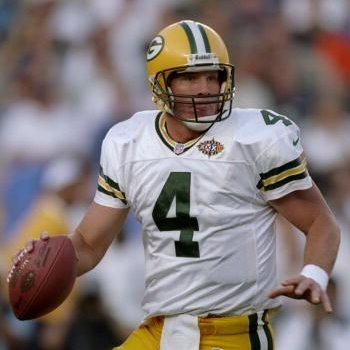
Standing in his way were the Green Bay Packers, the defending Super Bowl champions led by three–time MVP Brett Favre. The oddsmakers made Green Bay an 11–point favorite.

Of course, it wasn't unusual for an AFC team to lose the Super Bowl in those days. The NFC enjoyed a 13–year winning streak in the big game, and, on average, the NFC team outgained the AFC squad 2 to 1 and outscored the AFC team by more than 20 points in those 13 games.

It was a considerable mountain, therefore, that the fates required Elway and the Denver Broncos to climb on that day, and there were many who believed they could not do it.

That in itself was a bit strange because the Broncos had already overcome long odds to get to the Super Bowl in San Diego.

They didn't win their division and had to get into the postseason via the wild–card route. They faced another wild card team, the Jacksonville Jaguars, at home in the first round and won easily, 42–17.

But then they had to travel to Kansas City to face the champions of their division and won, 14–10, on a fourth–quarter touchdown.

And then they had to travel to Pittsburgh to face the Steelers in the AFC championship. The Broncos' late–season loss to the Steelers ultimately was partly responsible for Denver's loss of the division crown, but they turned back the Steelers in the rematch in spite of being shut out in the second half, giving Elway his fourth try at a Super Bowl ring.

What really made this attempt different was the fact that the offense wasn't so heavily focused on Elway and the passing game. Elway was armed with a pretty good running game, too, thanks mostly to halfback Terrell Davis, who ran for more than 1,700 yards.

Davis gave opposing defenses a lot to think about.

Super Bowl XXXII has been mentioned frequently as one of the best Super Bowls ever played. I would have to agree with that — even though I am a Packers fan and Super Bowl XXXII is the only Super Bowl the Packers have lost.

I believed at the time — and I still believe today — that the Packers shouldn't have lost that game.

With the score tied 24–24 late in the game, the Broncos were driving and doing pretty well. A field goal would have been enough to grab the lead, but, with Favre running the Green Bay offense, the Packers could have moved down the field quickly and either tied the game with a field goal of their own or taken the lead with a touchdown.

Elway, no doubt realizing that he might not have another opportunity to win an NFL title, practically willed his team to victory.

And, as Denver faced second and goal at the 1 with 1:47 to play, Green Bay coach Mike Holmgren told his players to allow the Broncos to score, giving the Packers more time for a game–tying drive. They had two timeouts remaining.

So Davis scored for the third time, and the Packers had 1:45 to work with. For awhile, it looked like the strategy might work. The Packers managed to drive to Denver's 31.

But then the drive fizzled out, and Elway had his championship at the age of 37.

As I have written here before, I am a Packers fan. At the time that game's finale was playing out, I didn't know that Holmgren had instructed his players to allow Davis to score. I thought it was a plausible outcome for Denver's drive, given that, all season, Davis had been providing the kind of ground game that Elway had lacked in his three previous trips to the Super Bowl.

And, as I watched the finish of that game, I felt disappointed that the Packers had lost, but I did not feel that the game had been given away. Well, not initially. After I heard about Holmgren's instructions, though, I did.

To be fair, Holmgren claimed that he thought it was first and goal, not second and goal, and, in that context, such a decision would make sense. It would preserve time and timeouts, and it is easy to see how sideline chaos in the final minutes of a Super Bowl could lead to all sorts of mistakes.

Tuesday, January 22, 2013

Down Goes Frazier


Ever since his victory in his much–anticipated bout with Muhammad Ali in 1971, Joe Frazier had stood atop the boxing world.

He defended his title twice in 1972 but against inferior opponents who required him to spend little time in the ring before stopping both on TKOs. I remember hearing nearly all the grown–ups in my world say that, since Ali had been turned back, no one could topple Frazier.

(That was just fine with many of the men I knew, too. Many had pulled for Frazier against Ali, largely because the majority of adults in Arkansas supported the Vietnam War. Ali, of course, had spoken against the war and refused to fight in it.)

Always in the distance, though, was the imposing figure of George Foreman, the gold medal winner at the 1968 Olympics in Mexico City. He turned pro the following year, and, once in awhile, I heard a grown–up speculate that Foreman could beat Frazier.

Even though Foreman was five inches taller than Frazier (who won an Olympic gold medal in Tokyo in 1964) and enjoyed a 10–inch reach advantage, Frazier was a 3–to–1 favorite when the two men met in Jamaica 40 years ago today. I suppose that was based on his years of experience as a pro — as well as his triumph over Ali (who was in every boxing conversation in those days, even if he wasn't on the fight card).

But both men entered the fight undefeated. And it didn't take long for observers to conclude that Foreman's height and reach advantage really did make a difference.

I've heard people ask if Foreman's victory on that night was an upset. I can't really say it was a big upset, even though it was regarded as an upset by many. I presume that was because Frazier was the champion and Foreman was younger, less experienced but already seen as a man who would one day be heavyweight champion of the world. Whether his win 40 years ago tonight was seen as an upset depended, I suppose, on whether the observer believed his time had come.

As it turned out, Foreman's "time" to be heavyweight champion came twice — on this night in 1973 and again 21 years later. He lost the title to Ali about a year and a half after winning it from Frazier.

The three–knockdown rule had been waived for the bout, but Frazier almost immediately became the poster child for why such a rule has a valid purpose. He went down three times in the first round and three times in the second before the fight was stopped.

"Foreman's last punch, a perfect right uppercut, lifted Frazier's stocky body into the air for an instant before he hit the canvas yet again," recalls The History Channel. "Frazier struggled to his feet, but at that point, 1:35 into the second round, the referee Arthur Mercante called an end to the bout."

It was during that brief bout that sportscaster Howard Cosell, doing the blow–by–blow for that era's equivalent of a pay–per–view audience, uttered what may well be the most memorable line of his career:

"Down goes Frazier! Down goes Frazier!"

Years later, Foreman confessed that Frazier was the only fighter he ever feared.